
Let me put you on real quick, this homemade roast beef is not supposed to be dry or tough. I’ve been sharing tested, reliable recipes for over a decade, and this one comes from knowing exactly how to cook a lean cut so it stays tender and flavorful. If you’ve ever been nervous about roast beef, trust me, this method works, I have the receipts for ya!
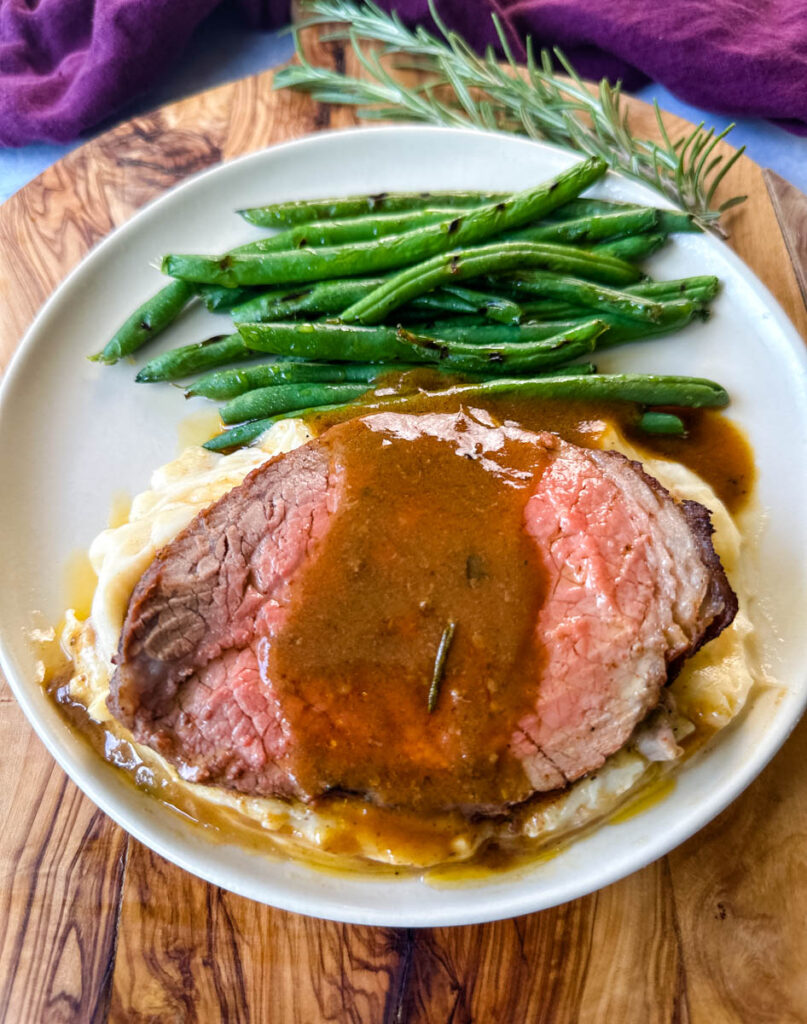
Roast Beef Recipe Ingredients
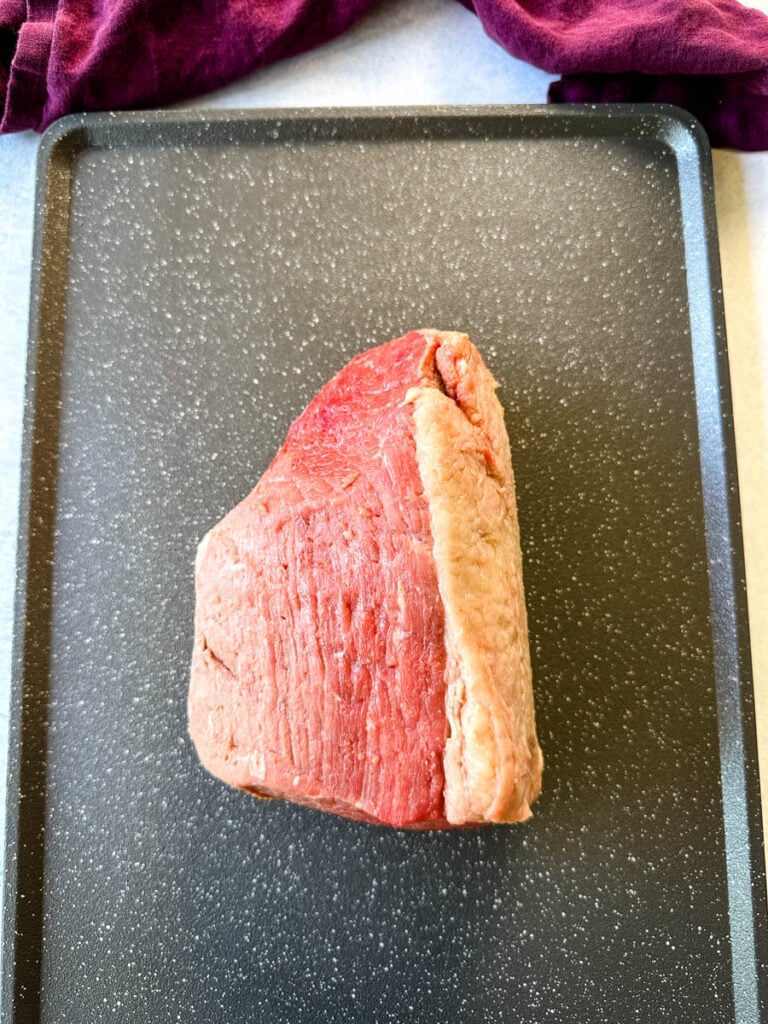
- Eye of Round Roast
- Olive Oil
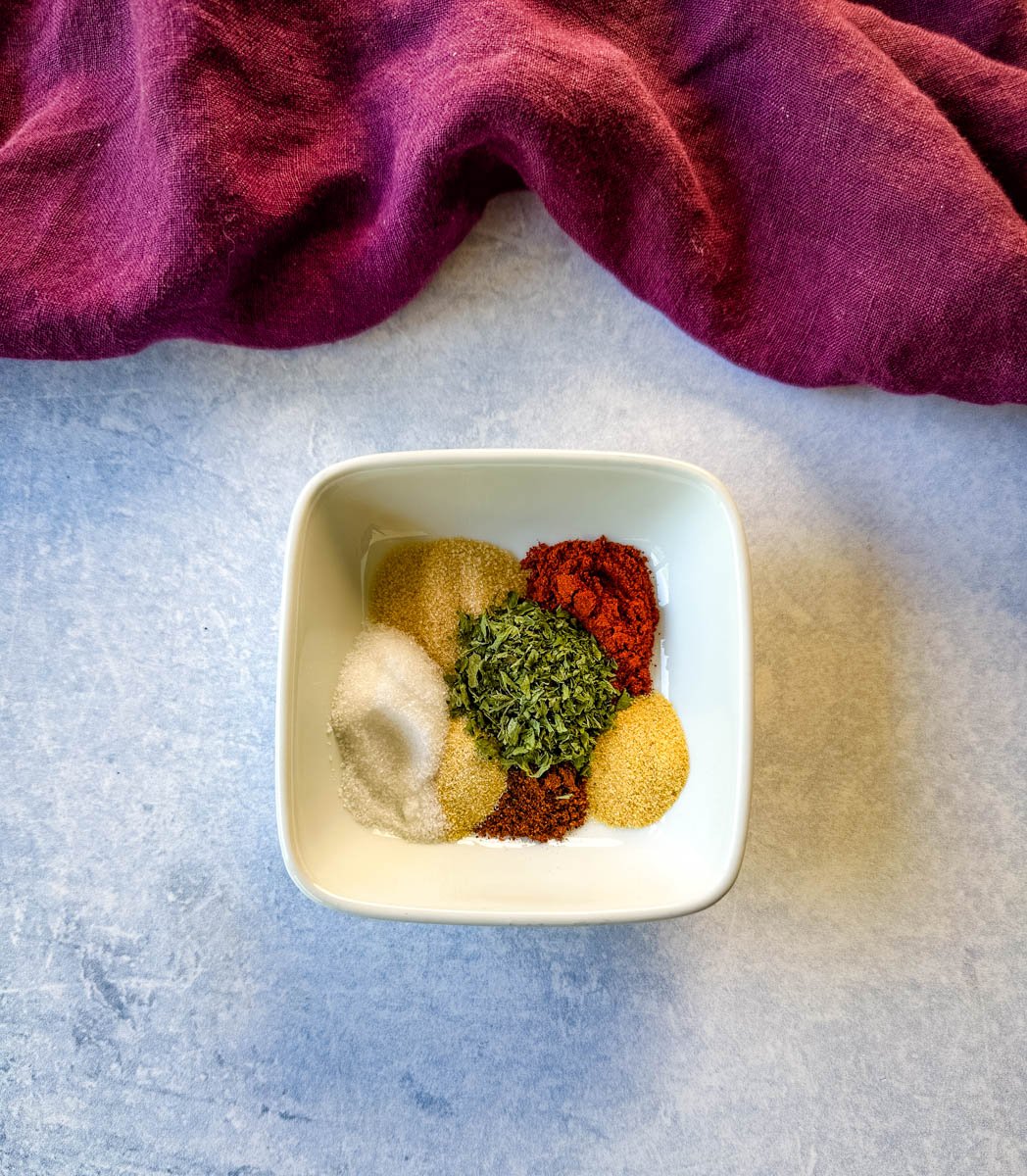
- Steak Seasoning or use my Homemade Steak Dry Rub Seasoning, which is a combination of Brown Sugar or Sweetener, Chili Powder, Garlic Powder,Onion Powder, Smoked Paprika, and salt.
How to Cook Beef Eye of Round Roast
Detailed measurements and full instructions can be found in the recipe card at the bottom of this post.
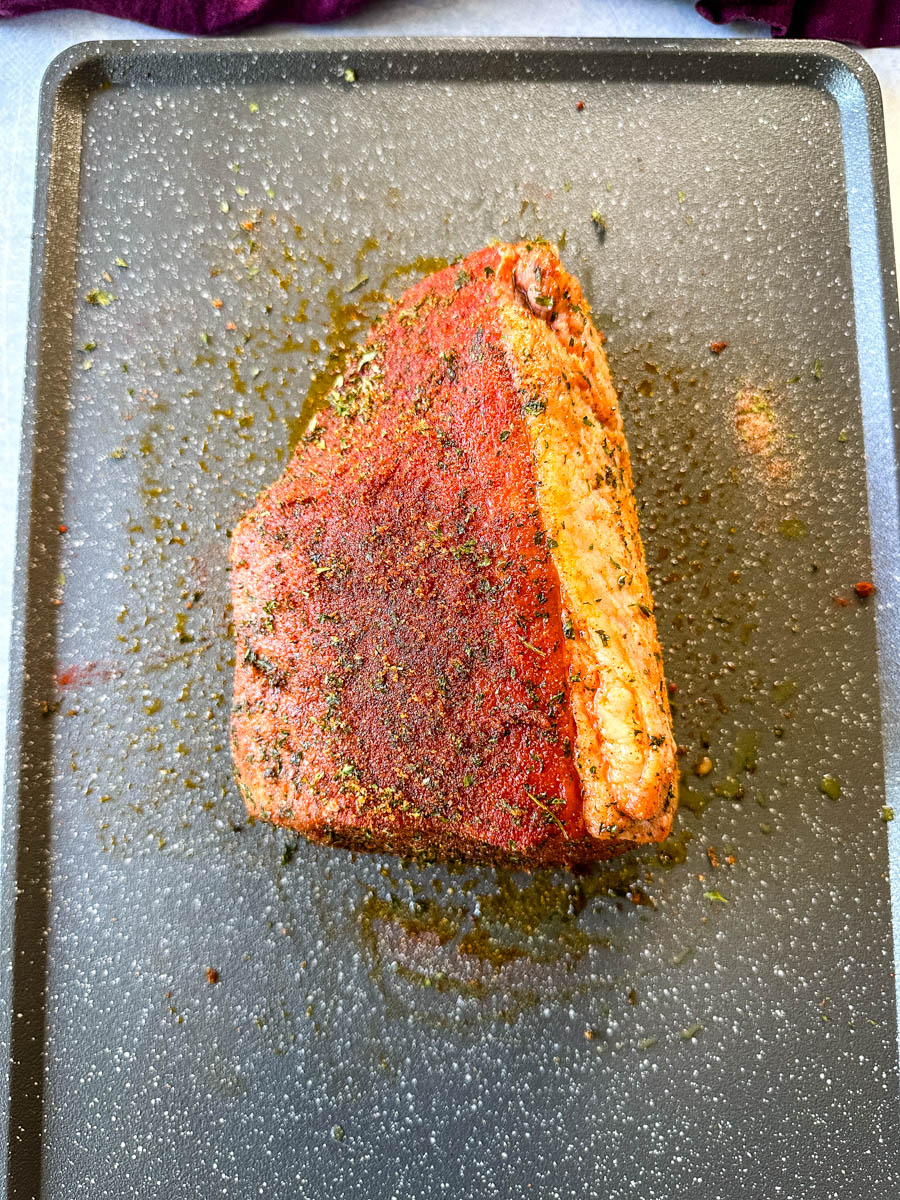
- Pat the roast dry and drizzle all sides of the roast with olive oil. Sprinkle the homemade steak rub throughout and rub the spices into the meat.
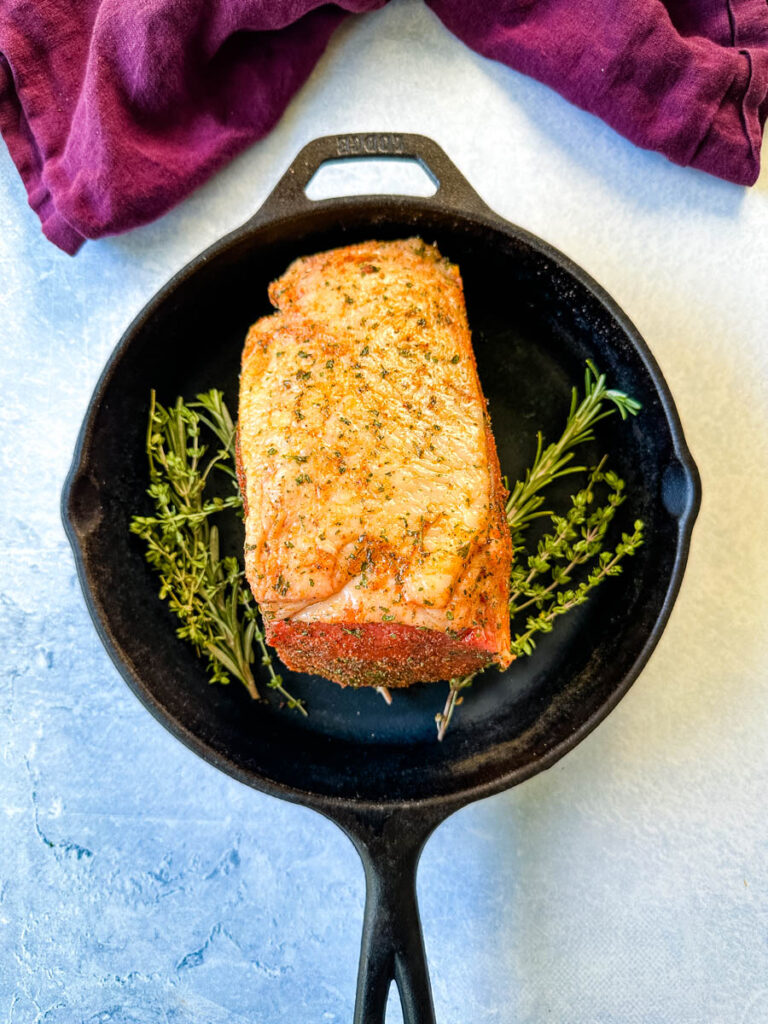
- Place the roast fat cap-side up in a cast iron skillet or roasting pan with rack.
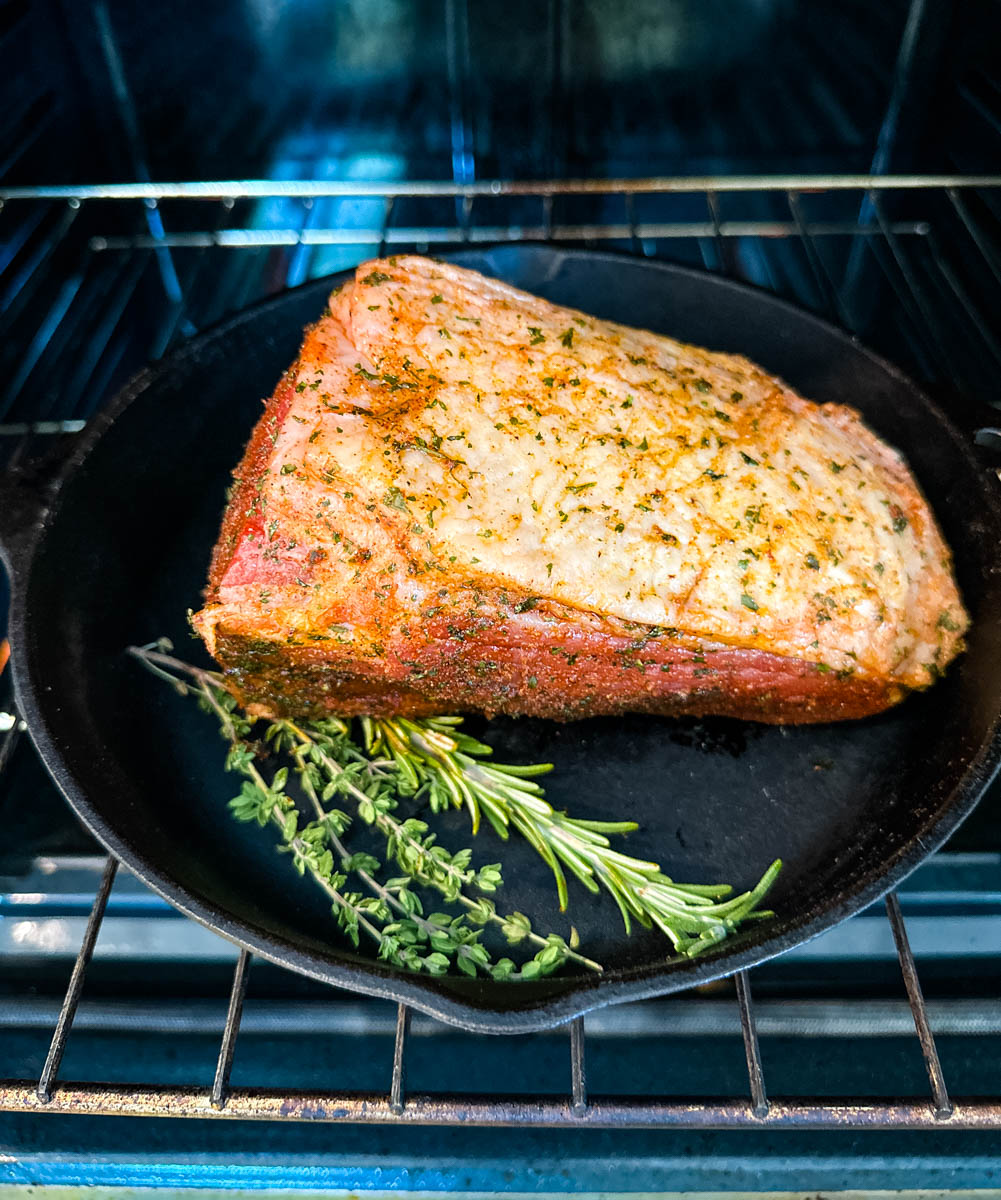
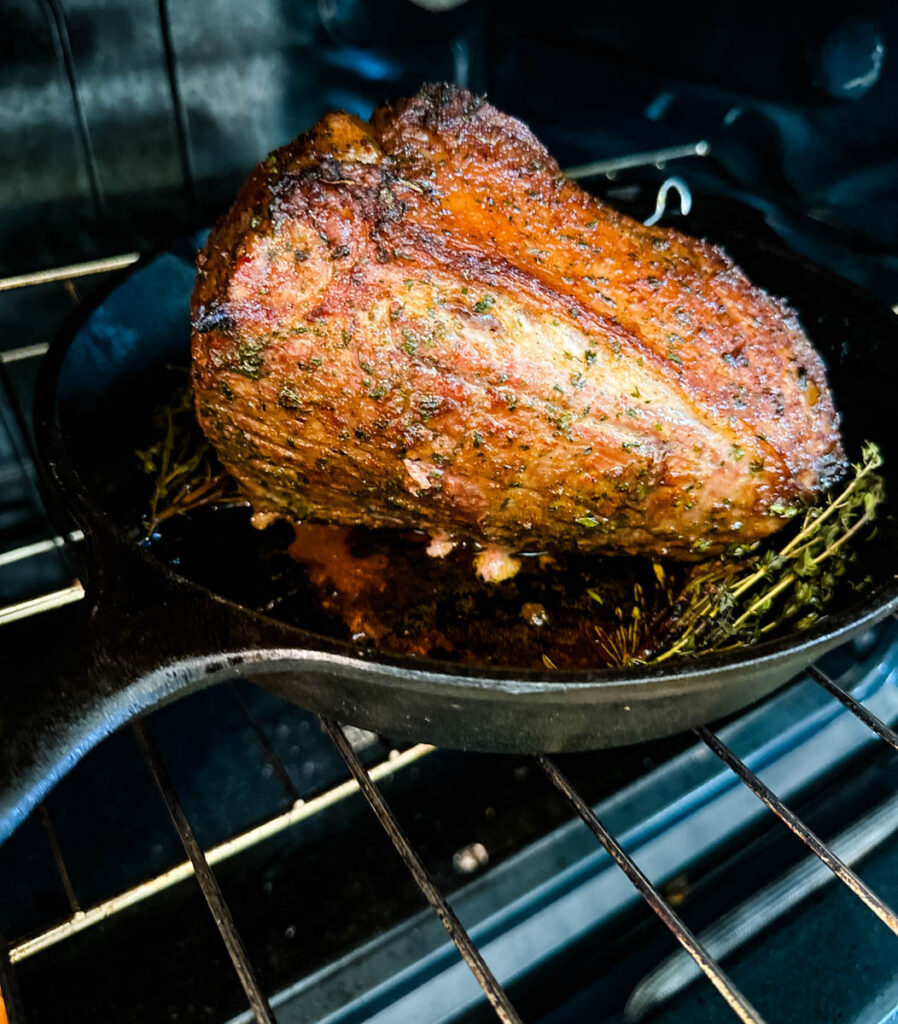
- Sear the roast and then bake.
- Rest before slicing.
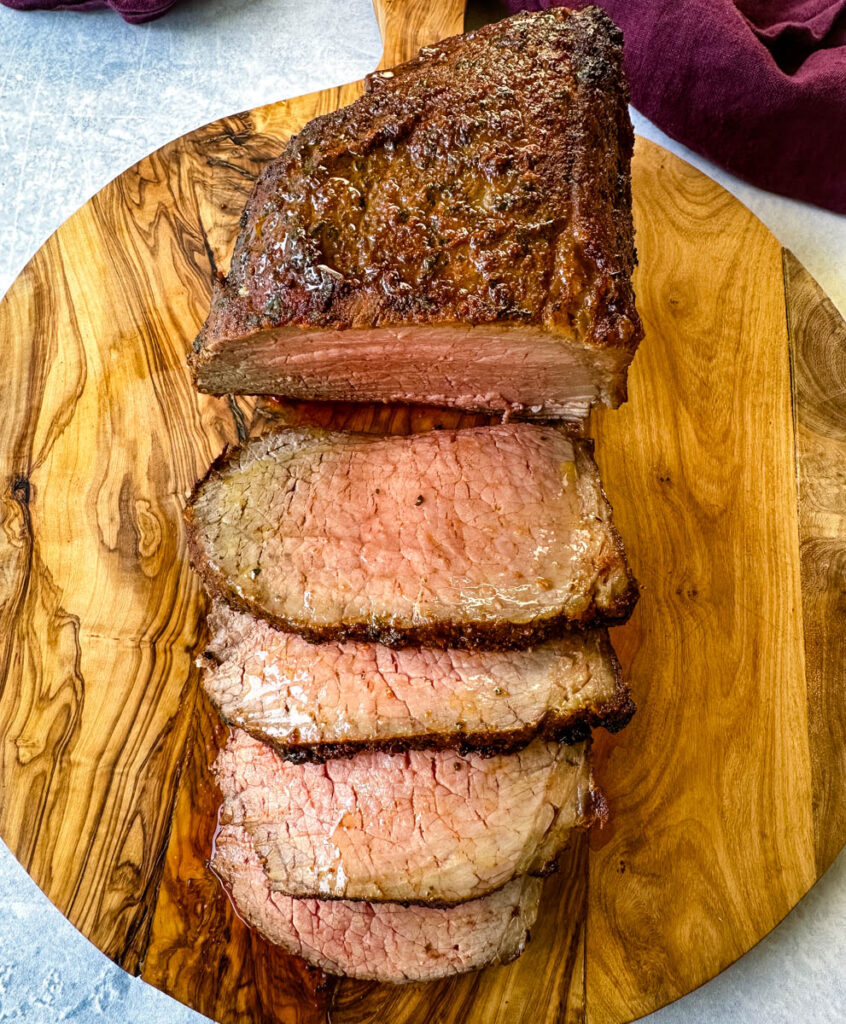
Want to save this recipe for later?
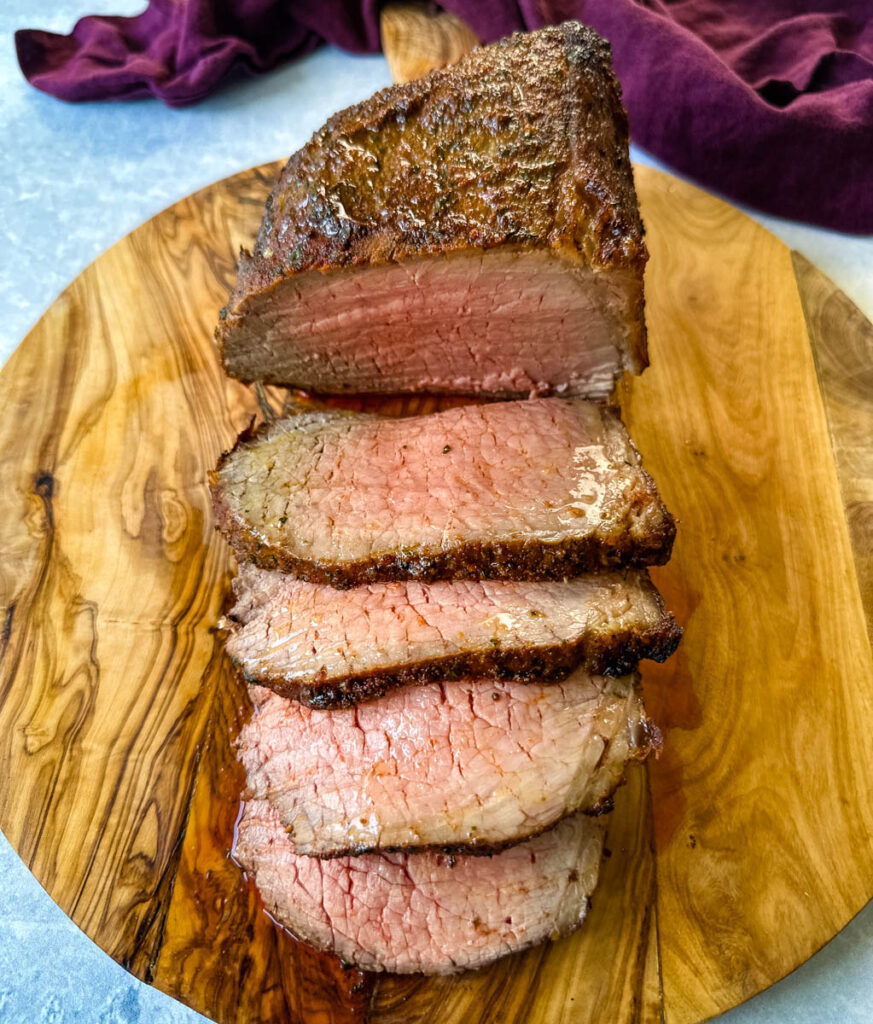
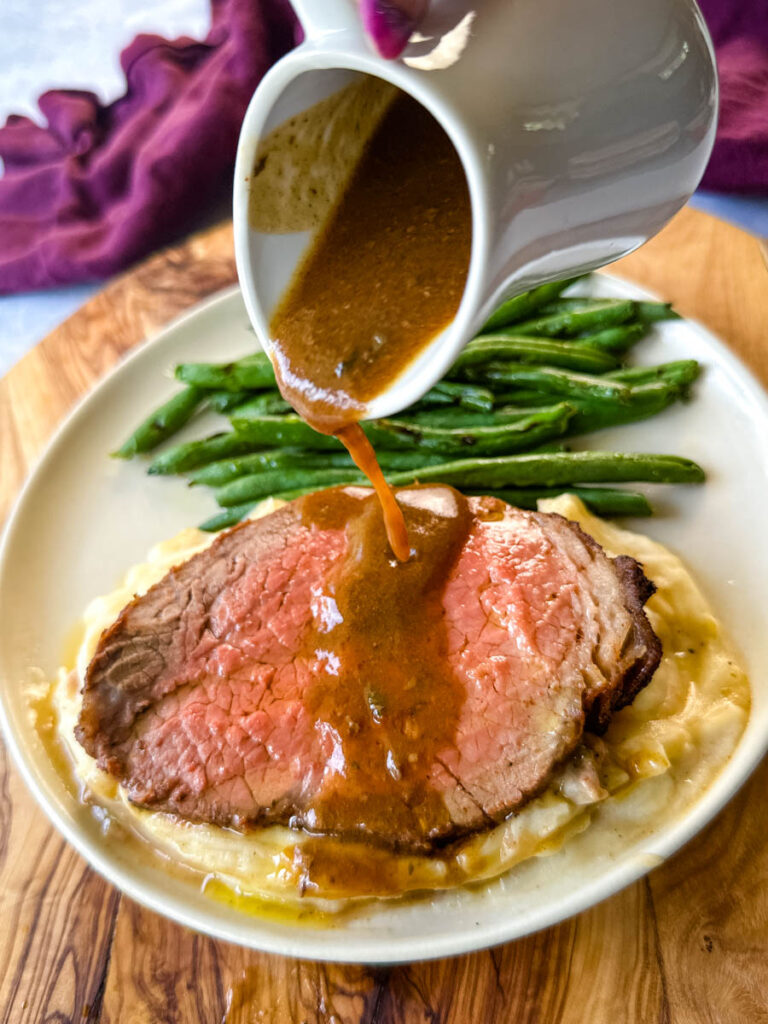
Eye of Round Roast Beef Recipe
Want to save this recipe for later?
Equipment
Ingredients
- 3-4 pound eye of round roast
- 1-2 tablespoons olive oil Use enough to fully coat the roast.
- 1 teaspoon smoked paprika
- 1 teaspoon brown sugar or sweetener
- ½ teaspoon garlic powder
- ½ teaspoon onion powder
- ¼ teaspoon chili powder
- 1 teaspoon salt Make adjustments to suit your taste.
Optional
- 2 fresh rosemary sprigs
- 3-6 3-6 fresh thyme sprigs
Instructions
- Remove the roast from the fridge and allow it to come to room temperature. This can take 2-3 hours depending on the size of the roast you have.
- Preheat the oven to 450 degrees.
- Pat the roast dry and drizzle all sides of the roast with olive oil. Sprinkle the spices throughout and rub the spices into the meat. Ensure the entire roast is seasoned and add additional spices if necessary.
- Add the optional rosemary and thyme to the pan.
- Place the roast fat cap-side up in a cast iron skillet or roasting pan with rack. Having the fat cap side (the thick layer of fat on the outside of the meat) on top allows the fat to melt down into the roast as cooks for extra flavor.
- Place the pan in the oven for 15 minutes or for however long it takes for the exterior meat to form a crust. It may take a few minutes longer.
- Adjust the heat on the oven to 325 degrees. Continue to cook the roast beef until it reaches your desired level of doneness. I cook mine until it reaches about 125 degrees, which is around an hour or a little more of cook time. Use a meat thermometer and remove the roast from the oven when it reaches the following:Rare: 113-120 degreesMedium Rare: 123-127 degreesMedium: 128-135 degreesMedium Well: 138-145 degreesWell Done: 148-155 degrees
- When you remove the roast from the oven, its internal temperature will continue to rise by a few degrees due to the residual heat within the meat.
- Allow the roast beef rest for at least 20 minutes prior to slicing. During this time, the internal temperature will continue to rise, and the juices within the meat will redistribute, resulting in a juicier and more flavorful roast. If you slice too soon you will likely end up with dry meat.
Notes
Nutrition
Nutrition Data
Macros are provided as a courtesy and should not be construed as a guarantee. This information is calculated using MyFitnessPal.com. To obtain the most accurate nutritional information in a given recipe, you should calculate the nutritional information with the actual ingredients used in your recipe, using your preferred nutrition calculator. You are solely responsible for ensuring that any nutritional information provided is accurate, complete, and useful.
Frequently Asked Questions and Recipe Tips
The best thing you can do is use a meat thermometer. Don’t guess. Pull the roast when it hits around 125–130 degrees if you want it medium-rare. It will keep cooking a little while it rests and land right where it needs to be.
Also make sure you let it rest before slicing. Give it about 10–15 minutes so the juices settle back into the meat instead of running all over the cutting board.
And when it’s time to slice, go thin and against the grain. That’s the trick that keeps eye of round tender instead of chewy.
Plan for about ½ pound of raw roast beef per person if it’s the main dish. That usually gives you generous portions plus a little wiggle room for seconds.
The key is low and slow cooking and slicing it the right way. Eye of round is very lean, so cooking it too hot or too long will make it tough. Roast it at a lower temperature, pull it when it hits medium rare to medium, let it rest so the juices redistribute, and always slice thin against the grain. Do that, and you’ll get tender, juicy roast beef every time, not dry or chewy.
The eye of round roast is a cut of beef that comes from the hindquarter of the animal, specifically from the round primal cut. It's a lean and relatively tough cut of meat that is often used for roasting or braising. Because it is quite lean, it can become dry and tough if not cooked properly.
The eye of round roast is elongated and cylindrical in shape, and it's known for its mild flavor. While it's not as tender as some other cuts of beef, when prepared correctly, the eye of round roast can yield a flavorful and satisfying meal.
When you’re shopping for this cut, quality and freshness matter. Costco is usually my go-to for specialty cuts like this because they’re consistent and easy to find.
Look for meat that’s a deep red color and looks moist, not dull or dried out. Avoid anything with brown or gray spots.
Eye of round is naturally lean, but a little marbling (those thin streaks of fat) will give you better flavor and tenderness.
Also think about size and thickness depending on how many people you’re feeding. A good rule of thumb is 4 to 6 ounces of cooked meat per person.
And don’t be shy about asking the butcher for help. They can point you to the best cut, trim it if needed, and even share cooking tips.
I use a 10 inch cast iron skillet for 3-4 pounds of meat. You may need a 12 inch skillet for large cuts of meat. Here are options:
Cast Iron Skillet or Pan: Cast iron is excellent for retaining and distributing heat evenly, which contributes to a well-cooked roast.
Roasting Pan: A roasting pan is a versatile choice and it typically comes with a rack that elevates the meat off the bottom of the pan, allowing air to circulate for even cooking. Roasting pans are often made of heavy-duty materials like stainless steel or aluminum, which helps distribute heat evenly.
Oven-Safe Skillet: If you have a heavy-duty oven-safe skillet, it can work well for searing and roasting.
Marinating an eye of round roast beef can be beneficial, but it's not always necessary. The eye of round roast is a lean and relatively tough cut of beef. Marinating can help add flavor and potentially assist in tenderizing the meat.
If you plan to marinate it, one method is to simply salt the roast the night before cooking. Sprinkle salt all over the roast and place it in the fridge for the salt to penetrate the meat overnight.
Another method is to drizzle the roast with soy sauce (enough to fully coat the meat) and allow it to penetrate in the fridge overnight. Soy sauce is a tenderizer.
No, you don’t have to sear an eye of round roast first, but it can make a difference in flavor.
I like to accomplish a sear the easy way and that's by using high temperature in the oven and I use a cast iron which is perfect for searing. Bake the roast at 450 degrees for 15 minutes to create an outer layer crust, then adjust the temperature down to 325 degrees so the meat cooks low and slow.
When cooking beef (pretty much any meat, including salmon!), you need to allow the meat to come to room temperature before you cook it. Don't take cold meat straight from the fridge and cook it. Allow 2-3 hours for the meat to come to room temperature. The time will vary based on the size roast you have.
Even Cooking: Cooking a cold piece of meat straight from the refrigerator will result in uneven cooking. The exterior might overcook while the center remains undercooked.
Tenderness: When meat comes to room temperature, the muscle fibers relax slightly, making the meat more tender when cooked.
Improved Flavor: Allowing the meat to warm up a bit will enhance the development of flavors during cooking. The even browning of crust and the creation of complex flavors occur more effectively when the meat is at room temperature.
The cook time can vary based on factors such as the size of the roast, the cooking temperature, and whether you prefer your meat rare, medium-rare, or well-done. Here's a general cooking time chart to give you an idea of the approximate cooking times at different temperatures.
Keep in mind that these are estimated times and should be used as a guide. It's crucial to use a meat thermometer to ensure your eye of round is cooked to your desired level of doneness.
Rare: 15-17 minutes per pound
Medium-Rare: 18-20 minutes per pound
Medium: 20-22 minutes per pound
Well-Done: 22-25 minutes per pound
After removing the eye of round from the oven, you should allow it to rest for about 20 minutes to an hour before carving. During this resting period, the internal temperature will continue to rise, and the juices within the meat will redistribute, resulting in a juicier and more flavorful roast.
Always use a meat thermometer to test when the roast beef is done. Take the beef out of the oven a few degrees before it reaches the desired internal temperature due to carryover cooking. When you remove the roast from the oven, its internal temperature will continue to rise by a few degrees due to the residual heat within the meat.
See cooking chart below.
Keep those drippings from your pan! I add fresh herbs to the pan while the roast beef cooks because it will make for an amazing homemade gravy. Check out my Au Jus recipe here.
Sliced pieces are often easier to reheat and use in sandwiches or other dishes. Wrap the leftover meat tightly in plastic wrap, or aluminum foil, or use an airtight container. Ensure that it's well-sealed to prevent exposure to air, which can cause the meat to dry out and absorb odors from the fridge. Leftover roast beef is best consumed within 3-4 days.
You can freeze the dish tightly covered and sealed up for to several months. Defrost overnight in the fridge.
You will need a sharp knife and a cutting board. Place the roast beef on the cutting board with the fatty side facing up. This allows you to easily see the grain of the meat.
Locate the Grain: Identify the direction of the muscle fibers (grain) in the roast. The goal is to carve against the grain, which will help ensure tenderness in each slice.
Start with the Ends: Begin carving by slicing a thin piece off one end of the roast. This helps expose the interior and provides a flat surface for stability.
Carving Slices: Use your carving knife to slice pieces of roast beef against the grain. Hold the knife at a slight angle to create wider slices. Carve consistently thin slices to maintain tenderness and make the meat easier to eat.
My favorite way to reheat is in the air fryer at 350 degrees until warm. The stove also works well. Add butter, oil, or sauce/au just to the pan to keep the meat moist while you heat it up.
I don't recommend the microwave. It can cause the beef to become unevenly reheated and potentially dry out. This method is best for small portions and should be used cautiously.
Cooking Chart
| Doneness | Remove From The Oven Temp | Final Temp | Notes |
| Rare | 113-120 degrees | 120-129 degrees | Bright red center, lukewarm. |
| Medium Rare | 123-127 degrees | 130-134 degrees | Bright red center, pink edges, warm. |
| Medium | 128-135 degrees | 135-144 degrees | Pink and warm throughout. |
| Medium Well | 138-145 degrees | 145-154 degrees | Slightly pink center and warm throughout. |
| Well Done | 148-155 degrees | 155-164 degrees | Little to no pink. |
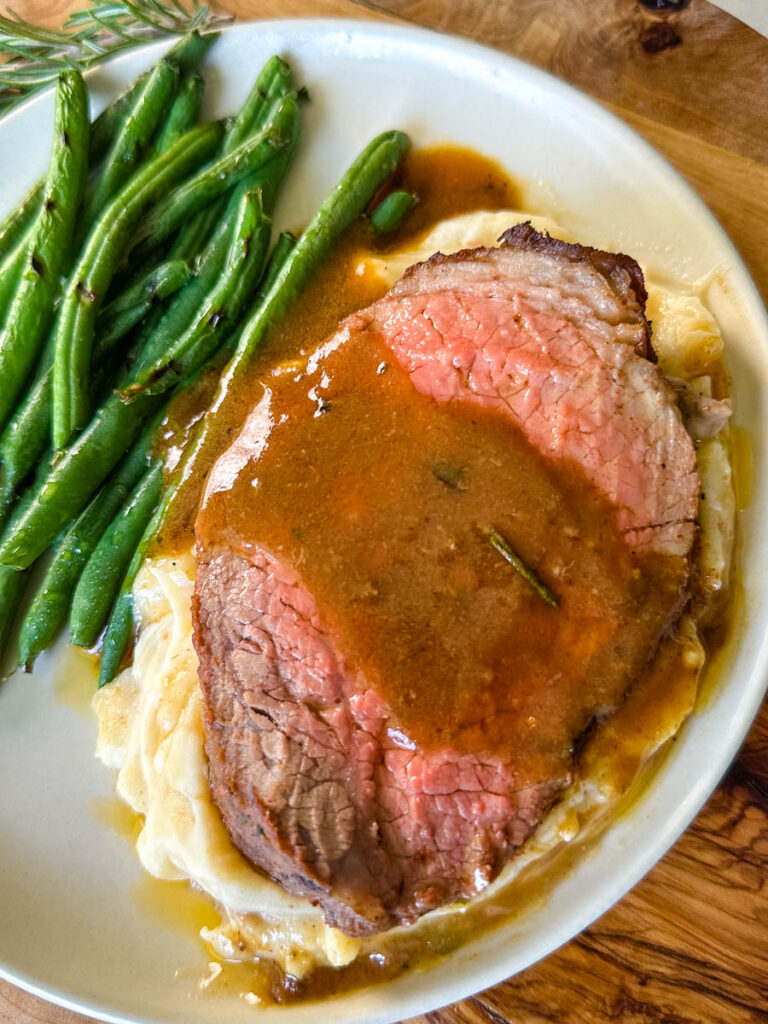
What to Serve with Roast Beef
Mashed potatoes or buttery roasted potatoes are a must. The gravy situation alone makes it worth it. Creamed spinach, green beans, or glazed carrots balance out the richness without stealing the show.
Pair With These Recipes
Green Bean Casserole with Bacon
Southern Cornbread Dressing with Chicken
Broccoli Au Gratin
Sweet Potato Casserole without Marshmallows
Rotel Dip with Beef
More Main Dish Recipes
Smoked Duck
Bone-in or Boneless Prime Rib
Braised Beef Chuck Short Ribs
Southern Baked Ham
Cajun Turkey
Beef Tips and Gravy
Baked Turkey Wings
Steamed Lobster Tail

Shelby says
As someone who is new to cooking roasts, I really appreciate all the details you share about cooking times, etc. It turned out really delicious and I'll be making it again for sure. Thank you!
staysnatched says
Glad to hear it was helpful.
Caroline says
So easy to make!
staysnatched says
Glad to hear it!
Beth says
I good roast beef is a thing of beauty, and this one really is beautiful. It looks delicious.
Andrea says
I have not had a good roast beef in a very long time and this one looks and sounds fantastic. I'm going to put this on my make list right now.
staysnatched says
I hope you love it.
Tayler says
I made this roast for dinner last night and it was perfect! Definitely going to add to our regular rotation!
staysnatched says
I'm glad to hear it will be in the rotation!