
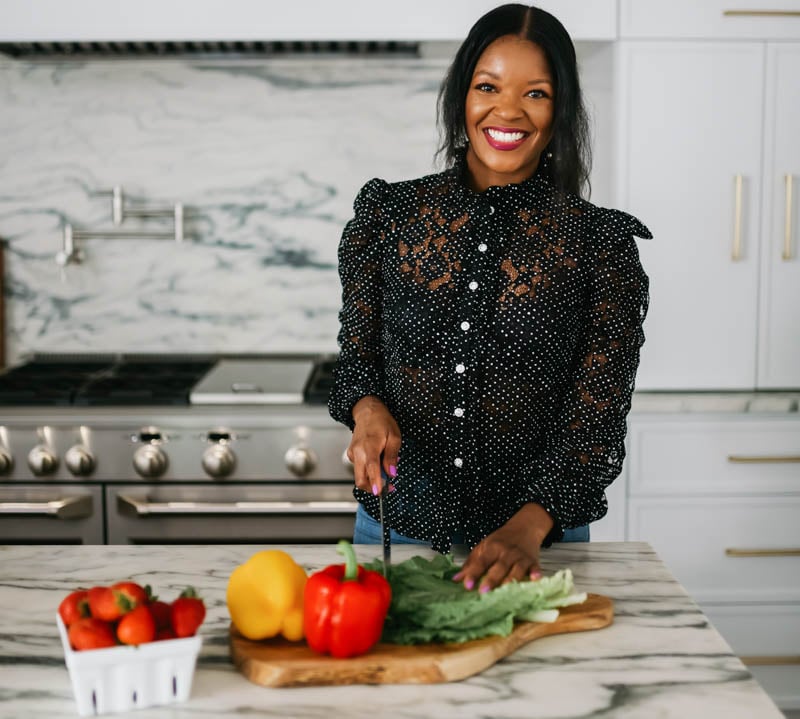
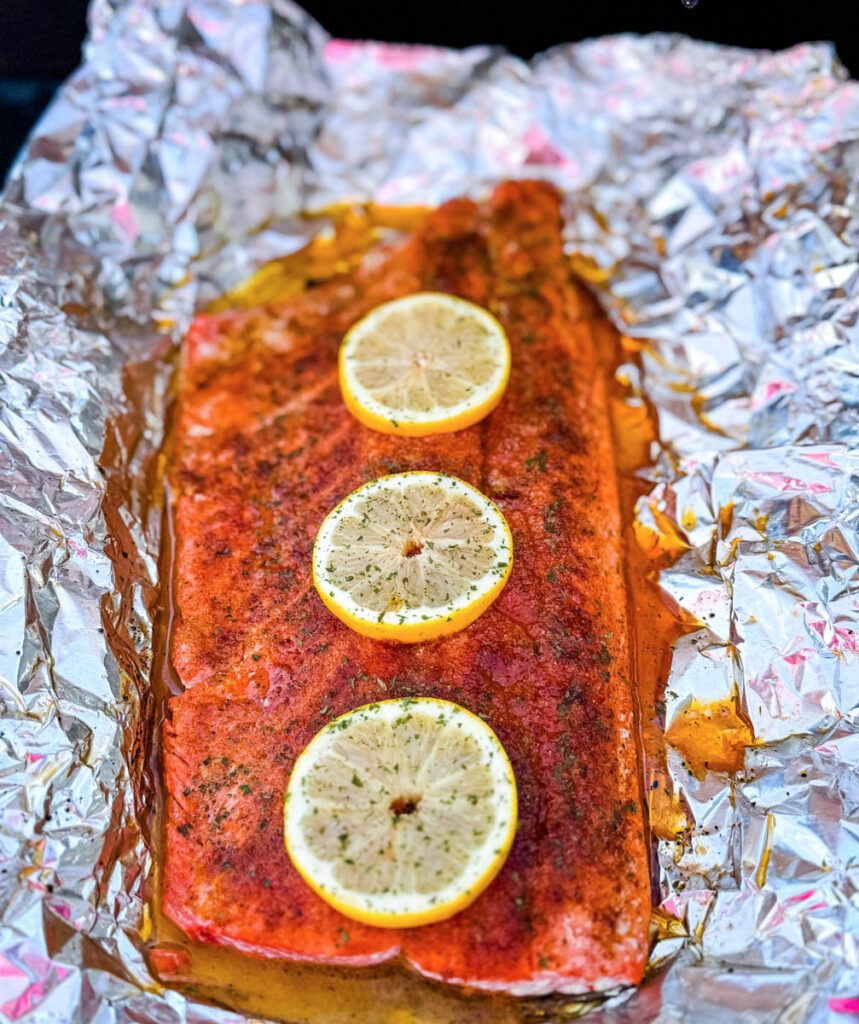
If you’ve ever worried about salmon drying out on the grill, foil is your best friend. It traps steam and flavor, keeping the fish juicy while it cooks evenly from edge to center. This grilled salmon in foil is my go-to when I want a no-stress dinner that still tastes fresh and well seasoned. I've been sharing recipes online for a decade, you can trust I've done the testing and hard work for you!
This post contains affiliate links. Please read my full disclosure here.
Grilled Salmon in Foil Ingredients
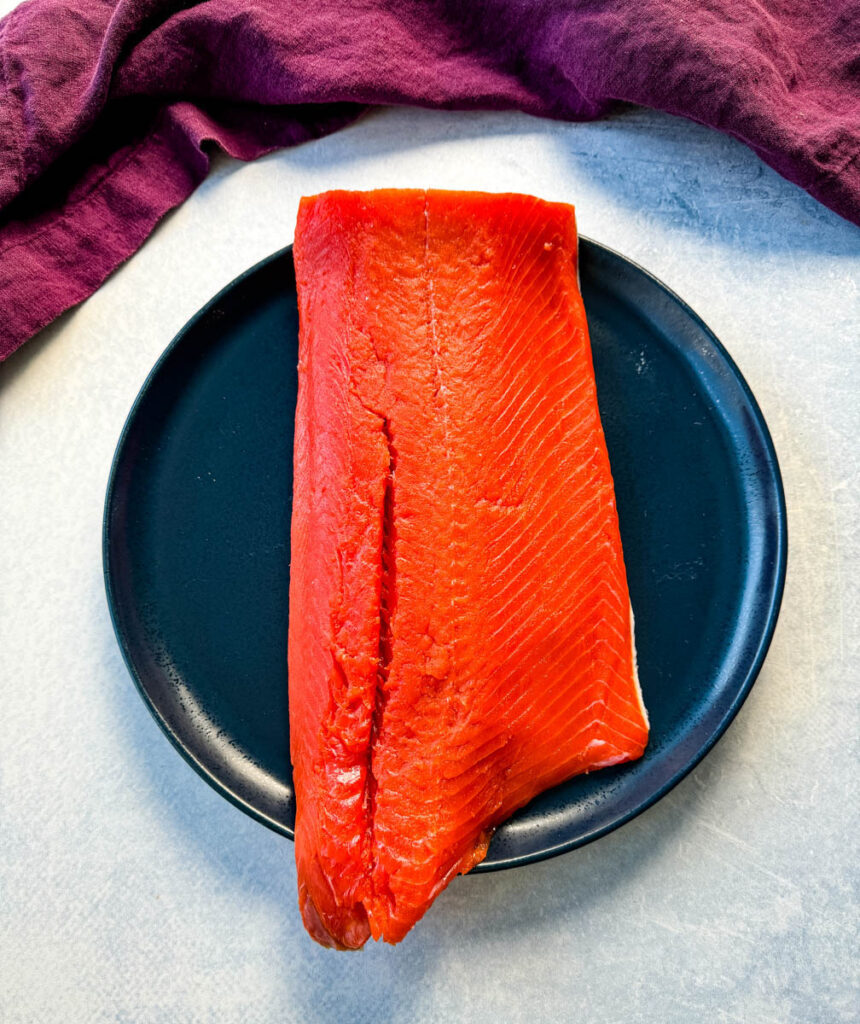
- Salmon: Look for center-cut, skin-on fillets about 1 to 1½ inches thick for the best results. For grilled salmon in foil, choose a variety that stays moist and holds up to the heat. I love Alaskan wild-caught salmon.
- Olive Oil
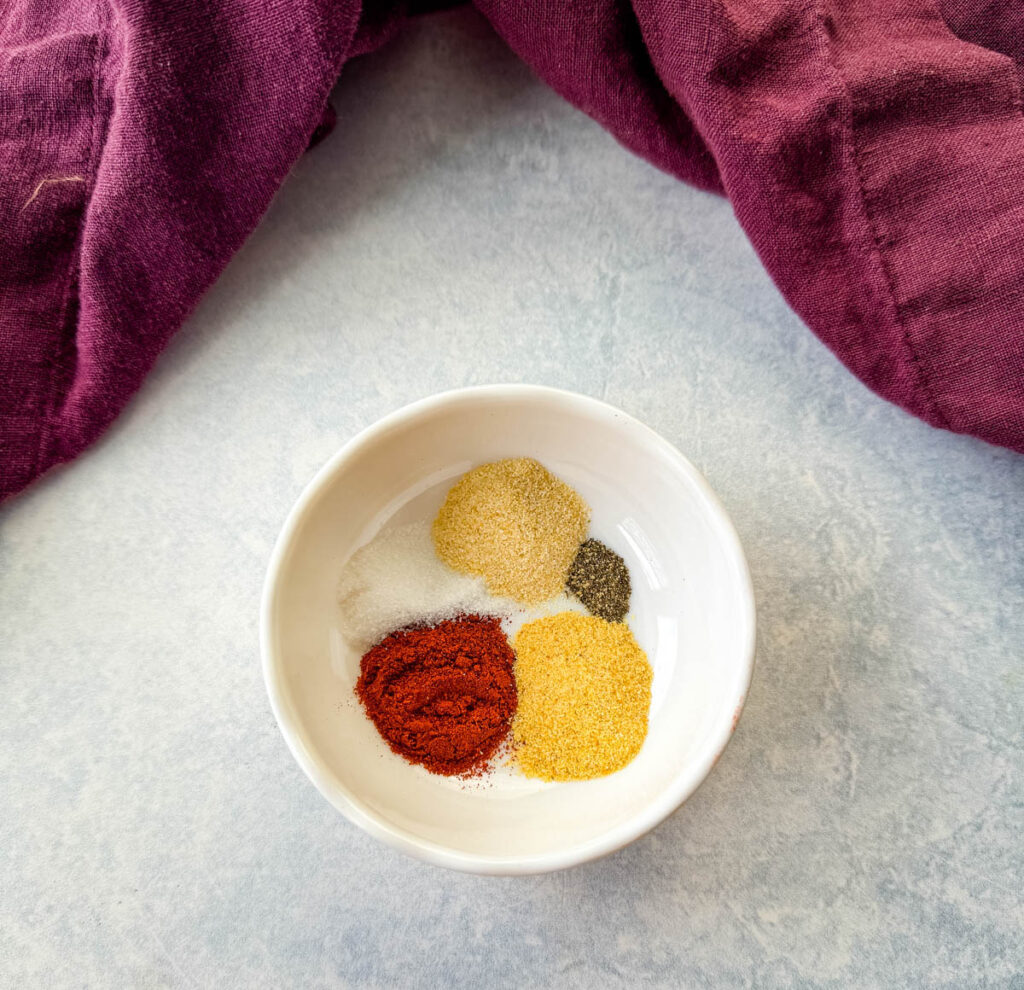
- Smoked Paprika
- Garlic Powder
- Onion Powder
- Salt and Pepper
How to Make Grilled Salmon in Foil
Detailed measurements and full instructions can be found in the recipe card at the bottom of this post.
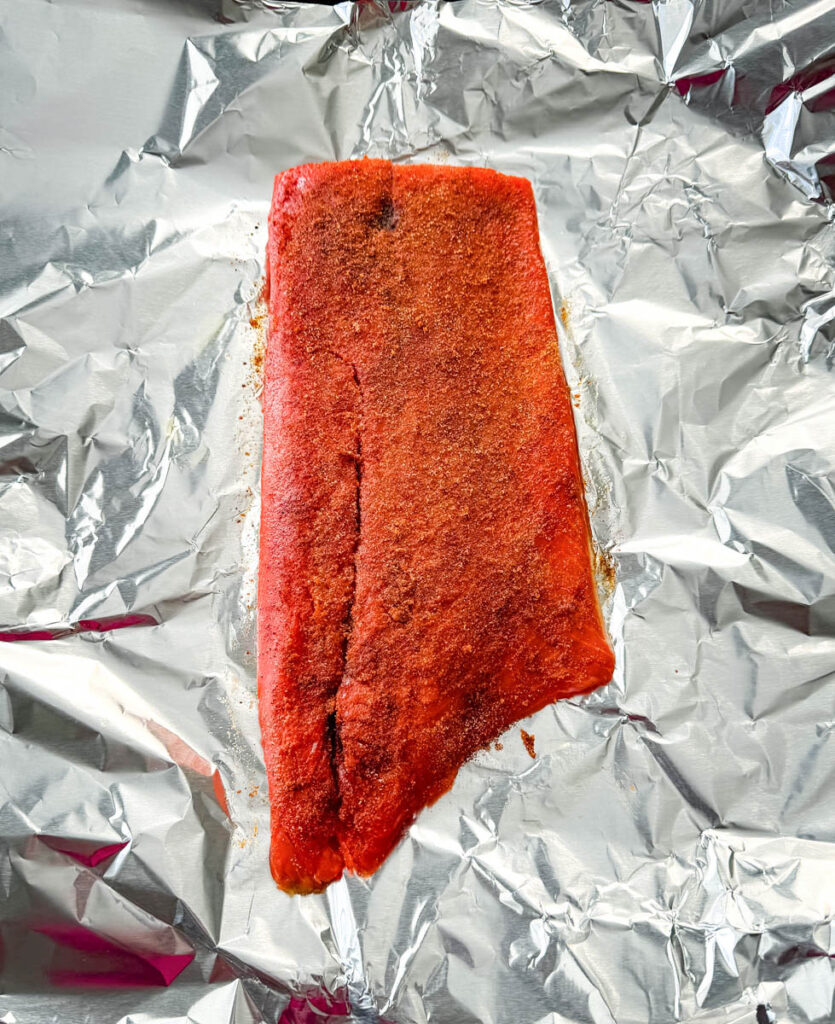
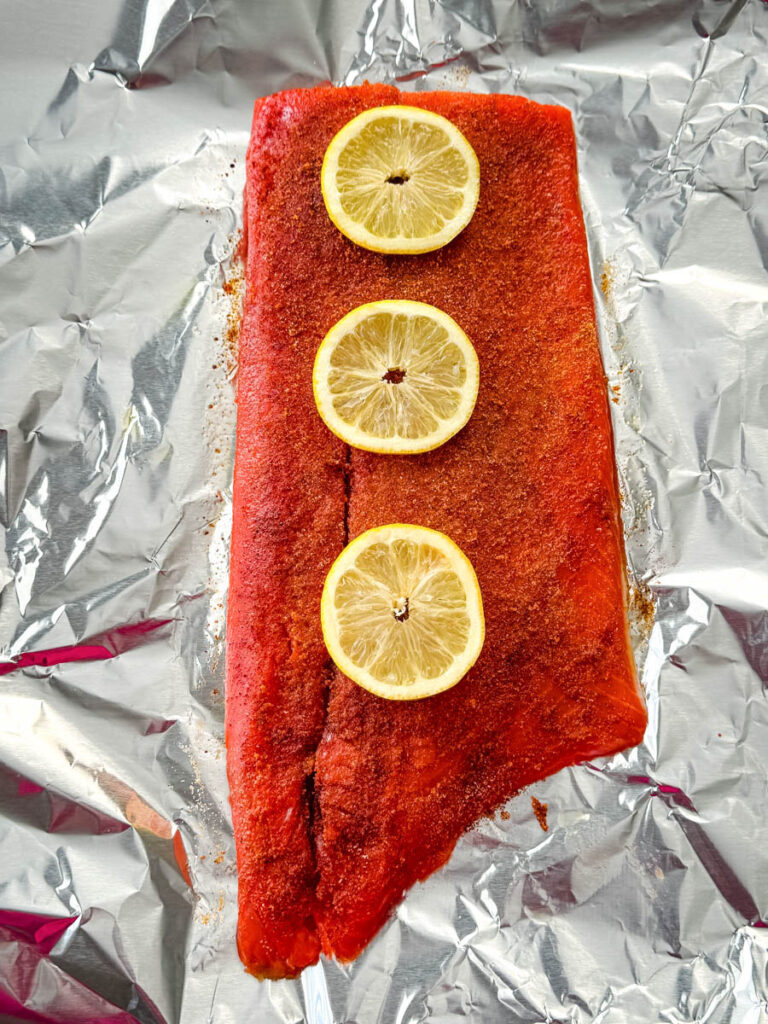
- Place the fish on a piece of foil (large enough to cover and seal the fish). Rub both sides of the fish with olive oil and sprinkle the spices onto both sides of the fish.
- Seal the foil around the fish.
- Grill.
Want to save this recipe for later?
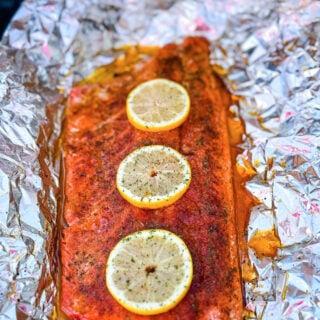
Grilled Salmon in Foil
Want to save this recipe for later?
Equipment
Ingredients
- 1-1 ½ pounds raw salmon
- ½ tablespoon olive oil
- ½ teaspoon smoked paprika Regular paprika is fine.
- ½ teaspoon garlic powder
- ½ teaspoon onion powder
- Salt and pepper to taste
- foil
Instructions
- Preheat grill to medium-high heat, 375 degrees.
- Place the fish on a piece of foil (large enough to cover and seal the fish). Rub both sides of the fish with olive oil and sprinkle the spices onto both sides of the fish. Rub the spices in to ensure the flavor penetrates.
- Seal the foil around the fish.
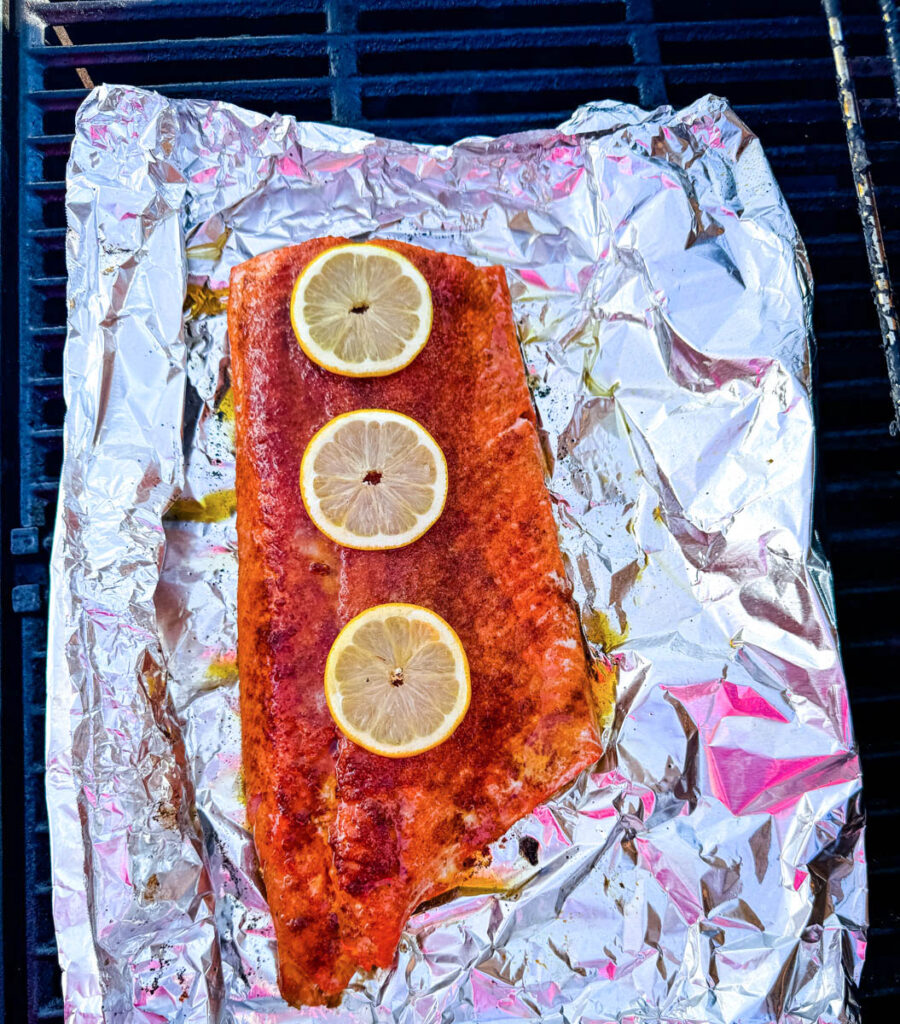
- Place the fish on the grill.
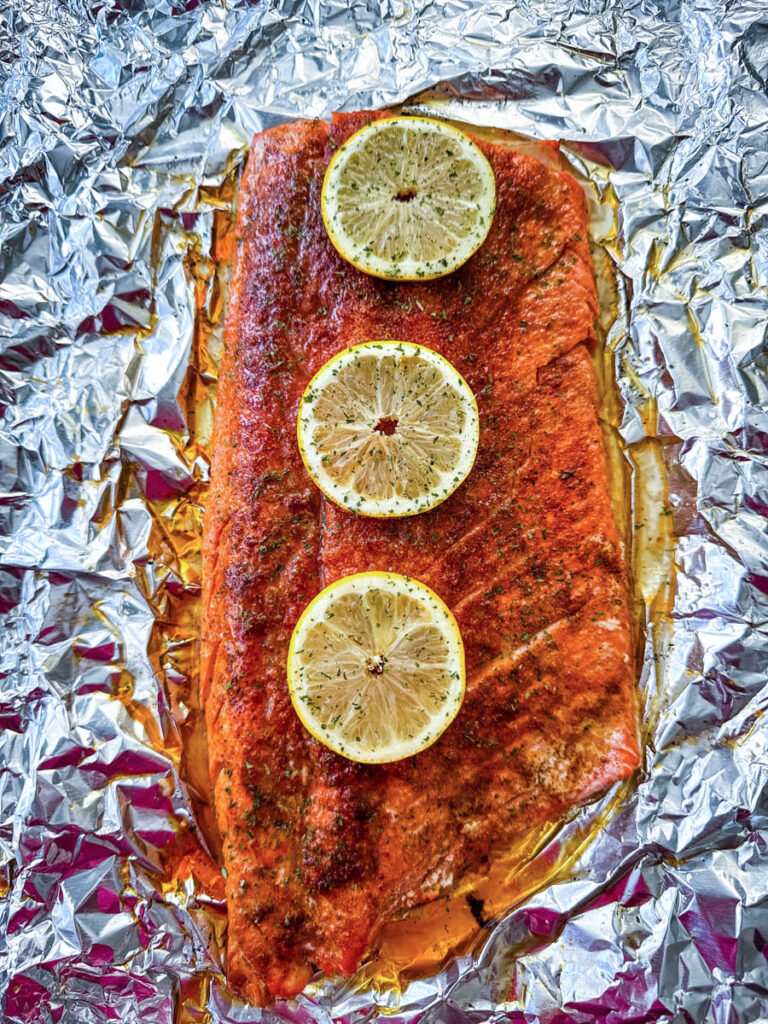
- Grill the fish for 8 minutes. Unwrap the foil and continue to grill the salmon uncovered for an additional 2-5 minutes until it reaches an internal temperature of 145 degrees.
Nutrition
Nutrition Data
Macros are provided as a courtesy and should not be construed as a guarantee. This information is calculated using MyFitnessPal.com. To obtain the most accurate nutritional information in a given recipe, you should calculate the nutritional information with the actual ingredients used in your recipe, using your preferred nutrition calculator. You are solely responsible for ensuring that any nutritional information provided is accurate, complete, and useful.
More Ways to Season Grilled Salmon
- BBQ Rub and Seasoning
- Cajun Seasoning
- Roasted Garlic
- Lemon Pepper
- Cayenne
- Dill
- Oregano
- Rosemary
- Cumin
- Chili Powder
- Honey
- Balsamic Vinegar
Frequently Asked Questions and Recipe Pro Tips
Cooking salmon with the skin on adds flavor and helps keep the fish moist. It acts like a barrier while it cooks, protecting the flesh from drying out or overcooking.
Cooking it without the skin exposes the flesh to more heat, which can help it cook evenly, but it’s also more delicate and can dry out faster.
If you cook salmon with the skin on, you can easily remove it after cooking, it usually slides right off. The skin gets nice and crisp while the fish stays tender and juicy.
The foil acts as a barrier between the salmon and the open flame, reducing the risk of flare-ups. This is important for preventing the fish from charring or developing an overly smoky flavor. This method also helps retain moisture to avoid dry fish.
And clean-up is a breeze! No need to scrub those grill grates.
Aim for a medium-high heat setting on your grill, which is around 375 to 400 degrees. This temperature range allows for thorough cooking without drying out the salmon.
You can use either grill for this recipe. I use a gas grill most often. Gas grills offer precise temperature control, allowing you to easily adjust the heat. This control is beneficial for preventing overcooking and achieving the desired doneness. They generally have a quicker setup time. Once the grill is preheated, you can start cooking.
Cooking salmon over charcoal imparts a distinct smoky flavor to the fish. The natural smokiness from charcoal can add an extra layer of depth to the overall flavor. Charcoal grills require more manual temperature control. The heat level can be adjusted by manipulating the airflow and adjusting the charcoal bed. This may require more attention during the cooking process.
Temperature: Use a meat thermometer and ensure the fish has reached an internal temperature of 145 degrees. Check the temperature in the thickest part of the fish.
Appearance and Touch: Perfectly cooked salmon will have a light pink color and will be opaque throughout. The flesh will also start to flake when pressed with a fork.
It’s important to note that salmon can be cooked to varying degrees of doneness, some people prefer it cooked through while others prefer it medium-rare at 135 degrees. Decide what works for you.
Overcooked salmon is dry and has little flavor. Fish (along with meat) will continue to cook when you remove it from heat. This is why it’s important to pay attention to how long the fish cooks.
When the fish is done, it will be a translucent pink in the middle. It should also look flaky.
Store the salmon tightly covered in the fridge for 3-4 days.
Leftovers can be frozen tightly sealed for up to 2 months. Defrost overnight in the fridge.
I recommend you use the air fryer or oven. If using the oven, place the salmon on a baking sheet lined with parchment paper. Cover the salmon with foil and place it in the oven at 275 degrees until warm.
If using the air fryer, reheat it at 200 degrees for 5-7 minutes or until warm.
If you use the microwave, be swift! Don’t leave it in too long. It will dry out the fish.
Pair With These Recipes
Smoked Baked Beans with Bacon
Southern Coleslaw
Potato Salad with Bacon
Grilled Asparagus in Foil
Kiya says
This has become my go-to way to make salmon. It's so simple and always comes out perfect!
staysnatched says
I totally agree!