

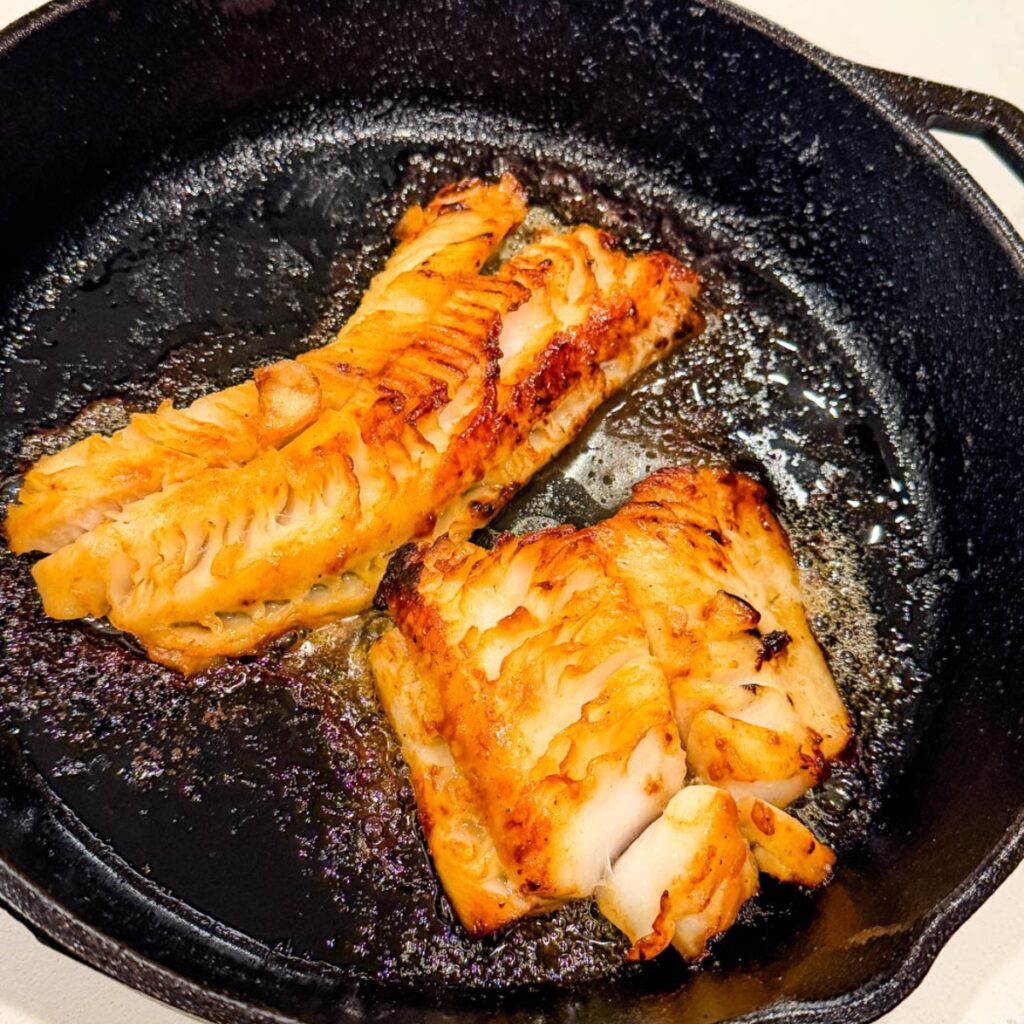
If you’ve ever had Nobu Miso Black Cod, you already know… it’s one of those dishes you don’t forget. That buttery, melt-in-your-mouth fish with that sweet and savory glaze? Yeah, we’re making that at home. I’ve been breaking down restaurant favorites into real, doable recipes for over a decade, and this one right here is worth it. No gatekeeping, no complicated steps, just well-seasoned food that actually hits. I’m going to show you how to get that same rich flavor and texture without feeling like you need a culinary degree.
This post contains affiliate links. Please read my full disclosure here.
The first time I had this dish at the Nobu in Vegas I knew it had to be a meal I consumed often. It's that good! It's so easy to prepare and I'm glad to add to my list of meals I love to make right at home.
Nobu Miso Black Cod Ingredients
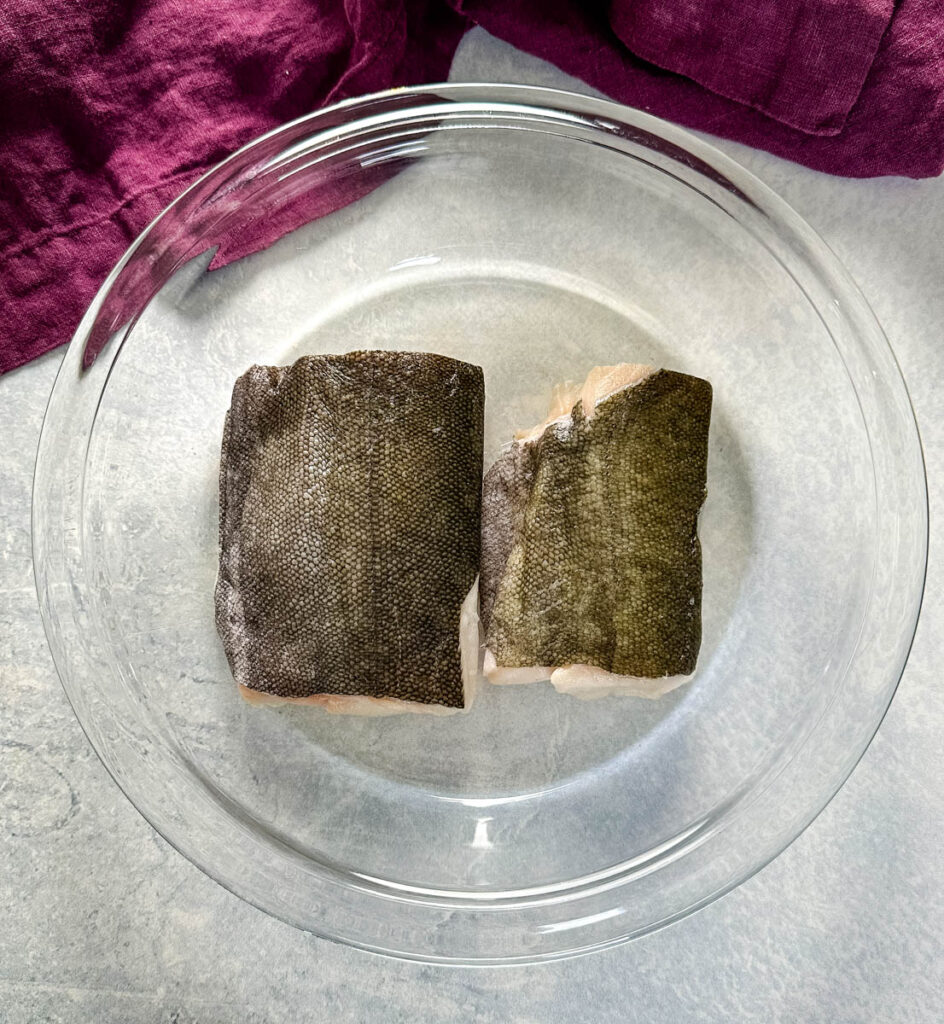
- Black Cod/Sablefish: I’ll keep it real, this one isn’t cheap. Black cod, also called sablefish or butterfish, is nothing like regular cod. It’s rich, buttery, and melts in your mouth. It comes from the Pacific coast, California up to Alaska, and it’s loaded with omega-3s so you’re getting flavor and benefits. You can air fry it, grill it, bake it, or sear it, but a miso glaze is where it really shines. You can find it online or at some grocery stores, just search “black cod sablefish near me” and see what’s around you.
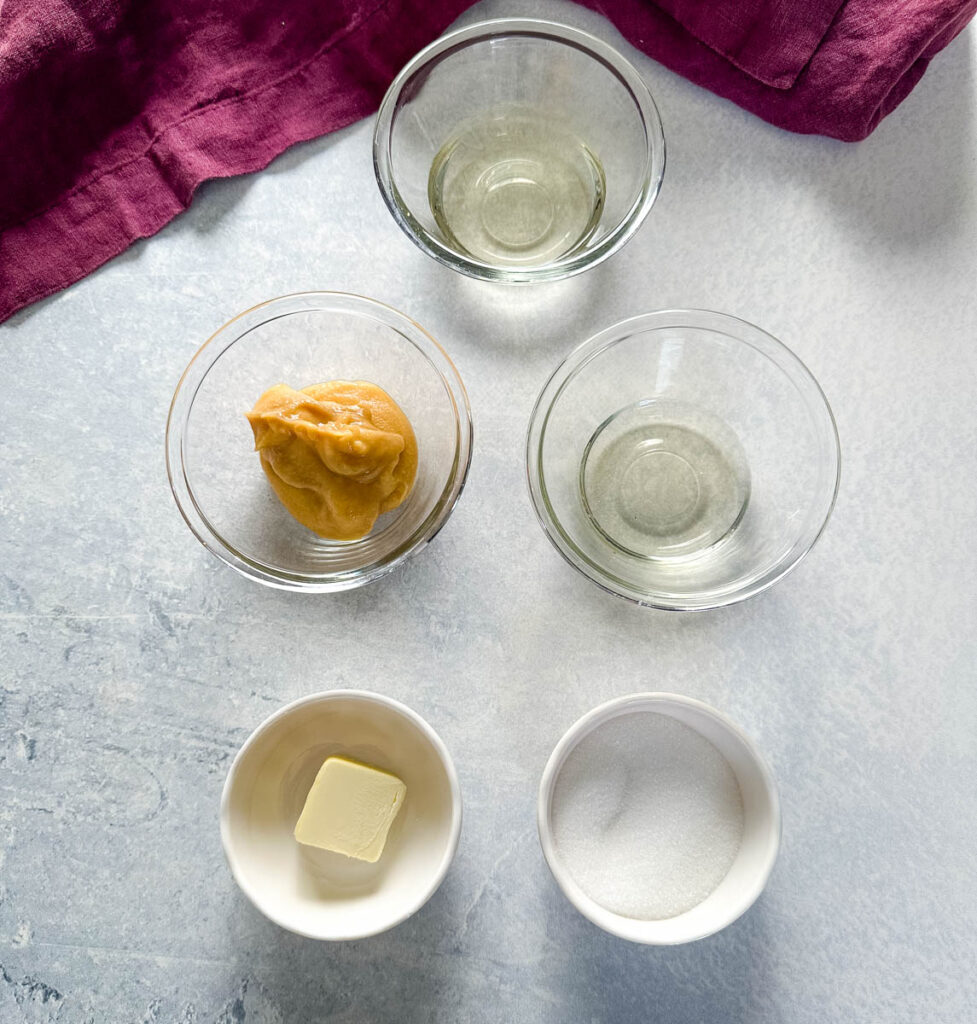
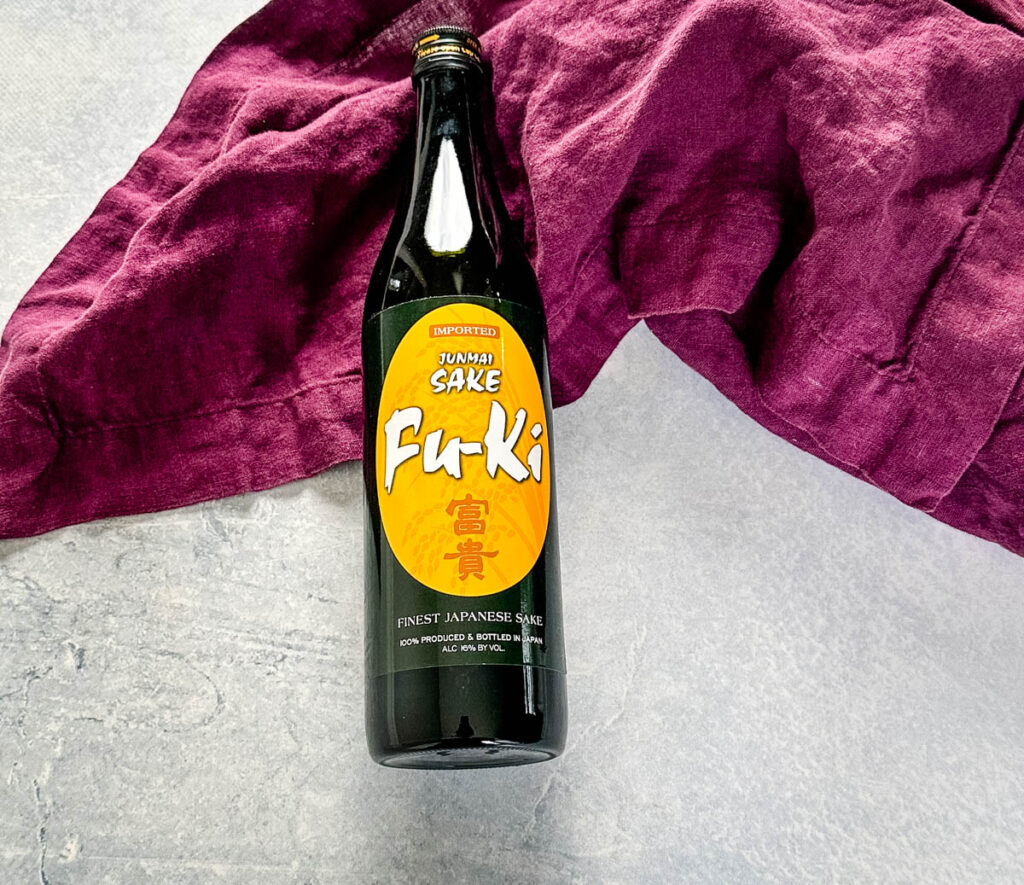
- Sake: Sake is a Japanese rice wine, and when you marinate fish in it, it really does its thing. It helps tenderize the fish and adds a light, savory flavor that takes it up a notch. If you don’t have it, you can swap in dry sherry, chicken broth, or rice wine vinegar. Just know the flavor will change a bit.
- White Miso Paste: Miso paste is a fermented soybean paste made with salt and koji, and it’s what gives this dish that deep, savory flavor. There are a few types, white, mixed, and red, but you want white miso for this one. White miso is mild, a little sweet, a little salty, and super smooth and creamy. That’s what makes it work so well here. These days you can grab it at places like Trader Joe’s, but I used to always get mine from Whole Foods.
- Mirin: Mirin is a Japanese sweet rice wine, and it’s what gives sauces that glossy finish and a subtle sweetness. It balances out salty ingredients like soy sauce and miso so nothing tastes too heavy. If you don’t have it, you can swap in a little sugar with rice vinegar or dry sherry. It’ll work, just know the flavor won’t be exactly the same.
- Sugar or Sweetener
- Butter
How to Make Nobu Miso Black Cod
Detailed measurements and full instructions can be found in the recipe card at the bottom of this post.
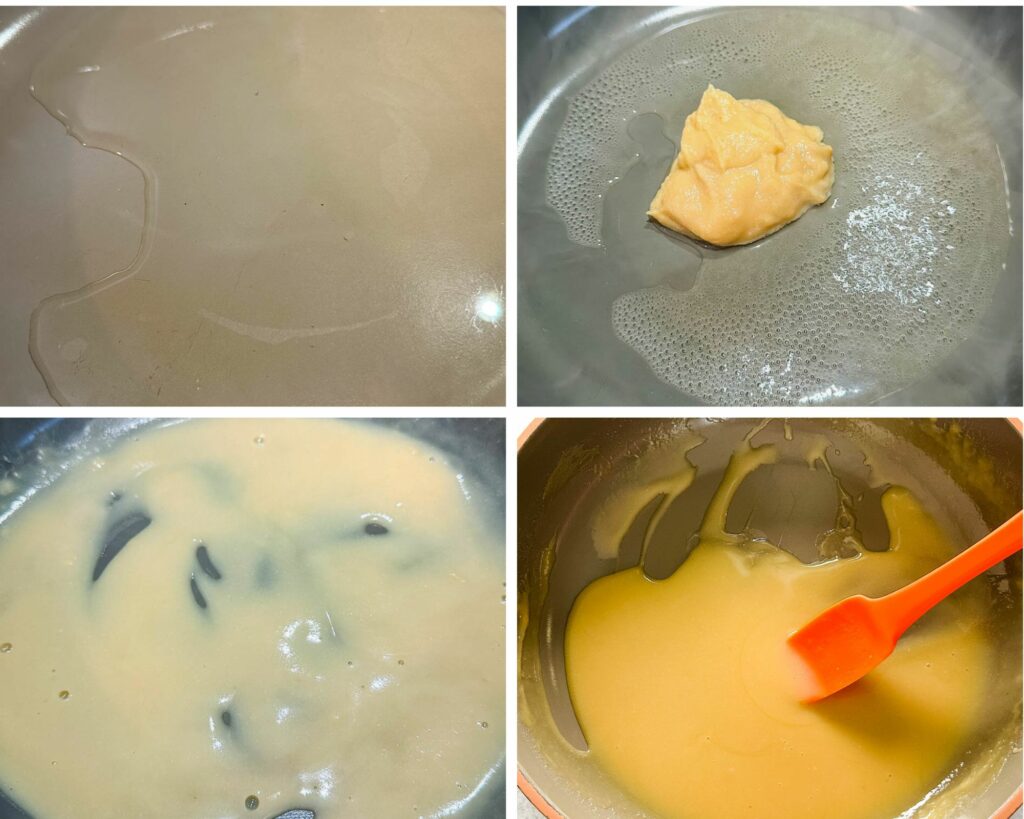
- Place a saucepan on medium heat and add the sake and mirin.
- Add in the miso paste and stir.
- Add in sugar or sweetener and stir.
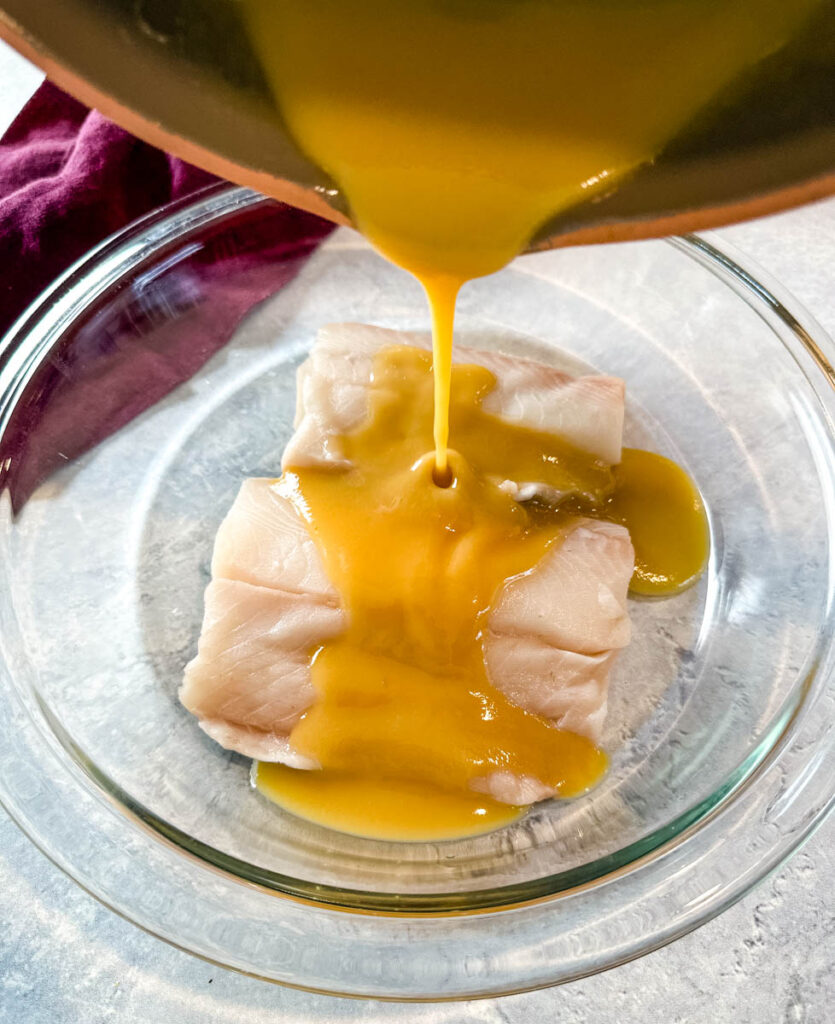
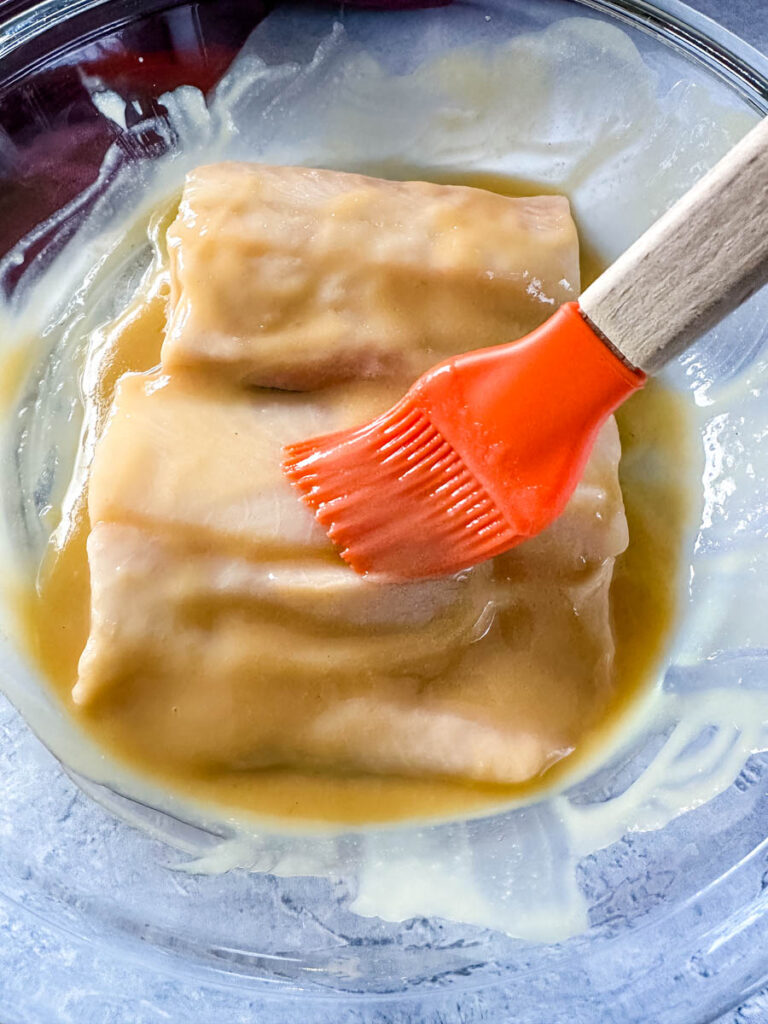
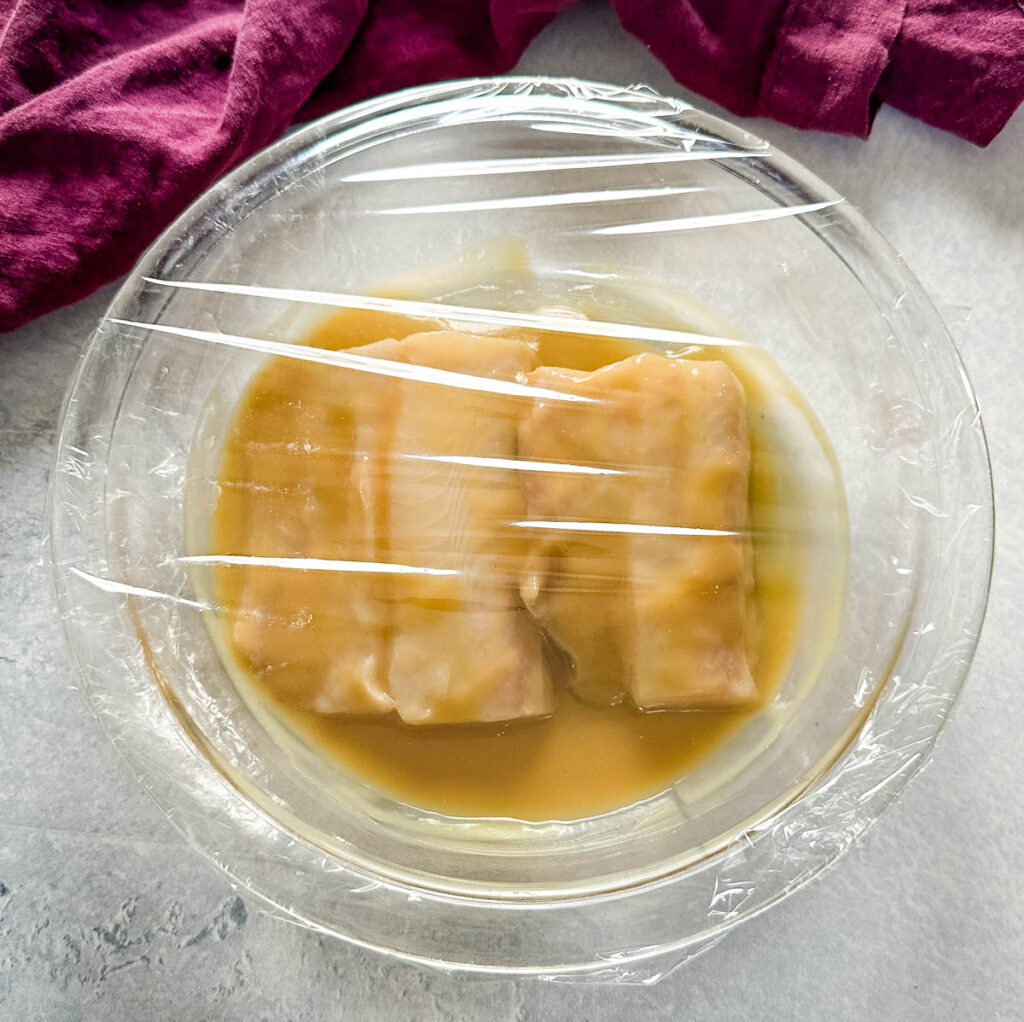
- Place the fish in a shallow bowl or a zip log bag. Pat the fish dry and add the marinade to the fish. Cover the bowl with wrap or foil or seal the zip lock and place the fish in the fridge. Marinate.
- Preheat oven to 400 degrees.
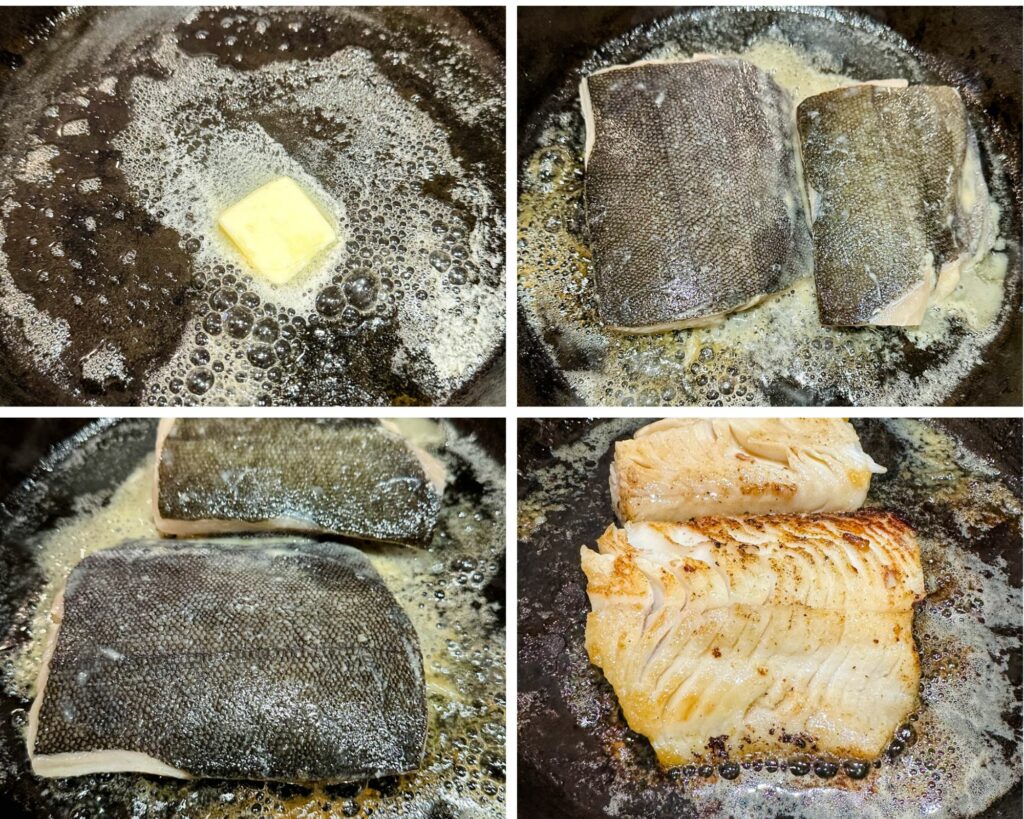
- Place a skillet or grill pan (I use cast iron) on medium-high heat on the stove along with the butter.
- When the butter has melted, add the marinated fish to the pan with the fish skin side up.
- Sear. Flip the fish.
- Place the fish in the oven and bake.
- Cool before serving.
Want to save this recipe for later?
Pair With these Recipes
Fried Potatoes and Onions
Air Fryer Bacon Wrapped Asparagus
Steakhouse Creamed Spinach
Southern Creamed Corn
Nobu Miso Black Cod Recipe
Want to save this recipe for later?
Equipment
Ingredients
- ¼ cup sake
- ¼ cup white miso paste
- ¼ cup mirin See notes for substitutes.
- 2-3 tablespoons sweetener or sugar
- 14-16 oz black cod/sablefish
- 1 tablespoon unsalted butter
Instructions
- Place a saucepan on medium heat and add the sake and mirin. Stir for 2-3 minutes and allow the mixture to come to a boil.
- Add in the miso paste and stir continuously for 2-3 minutes until it has dissolved.
- Add in half of the sugar or sweetener and stir. Add in the remaining sweetener and stir until it has dissolved. Taste the marinade repeatedly. Add additional sweetener to suit your taste if needed.
- Place the fish in a shallow bowl or a zip log bag. Pat the fish dry and add the marinade to the fish. I like to use half of the sauce here for the marinade and the remaining to drizzle over the fish once it has cooked (for ultimate flavor).
- Cover the bowl with wrap or foil or seal the zip lock and place the fish in the fridge. The original version is marinated for at least 24 hours, but you can marinate it for 2-3 days if desired. I marinate it for at least 1 hour and the flavor is still amazing!
- Preheat oven to 400 degrees.
- Place a skillet or grill pan (I use cast iron) on medium-high heat on the stove along with the butter.
- Wipe away any excess marinade from the fish, but leave most of it intact. This is important because excess marinade will char, wiping the excess helps prevent that.
- When the butter has melted, add the marinated fish to the pan with the fish skin side up.
- Sear for 2-3 minutes until the fish turns brown. Flip the fish.
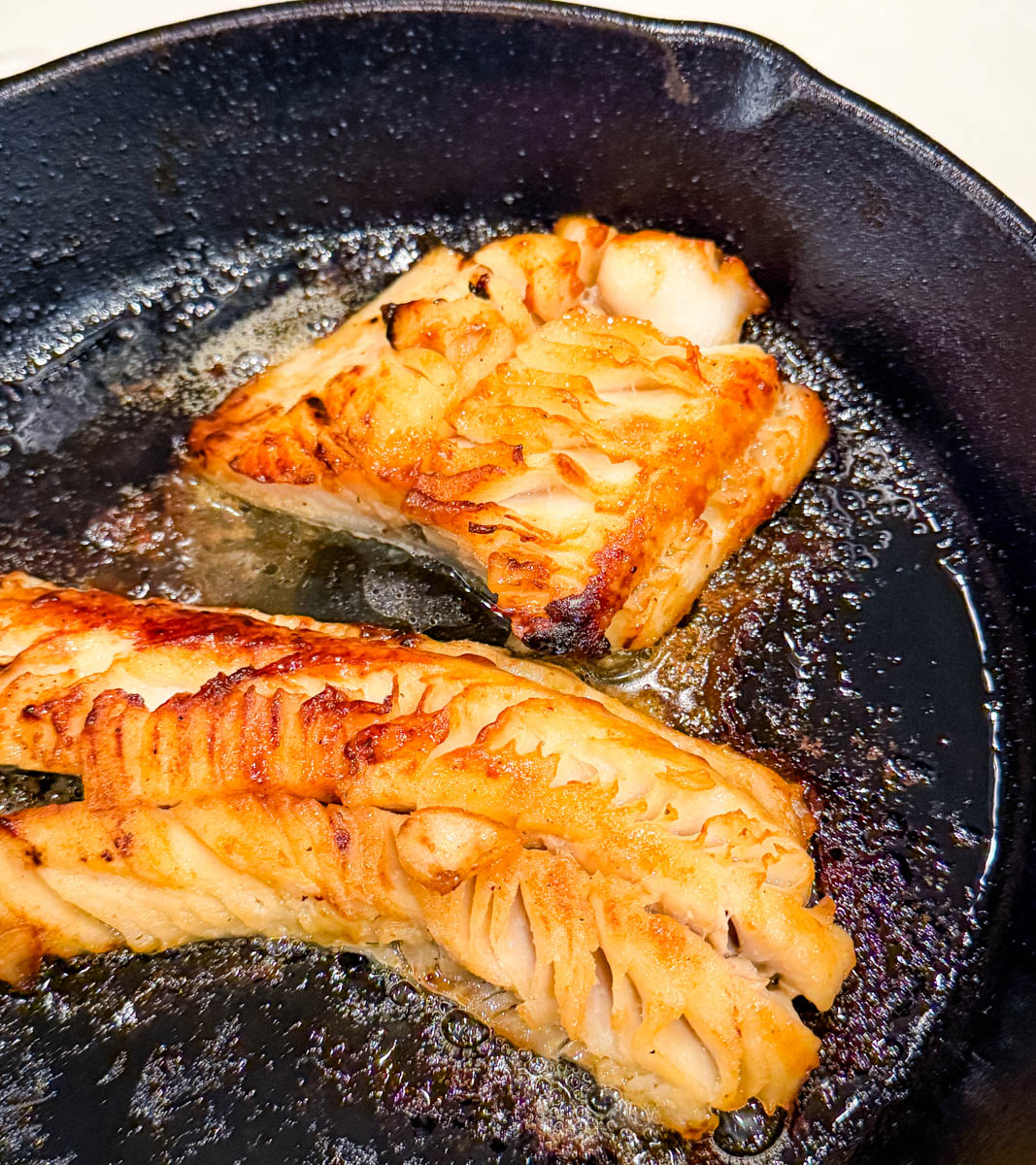
- Place the fish in the oven and bake for 6-9 minutes.
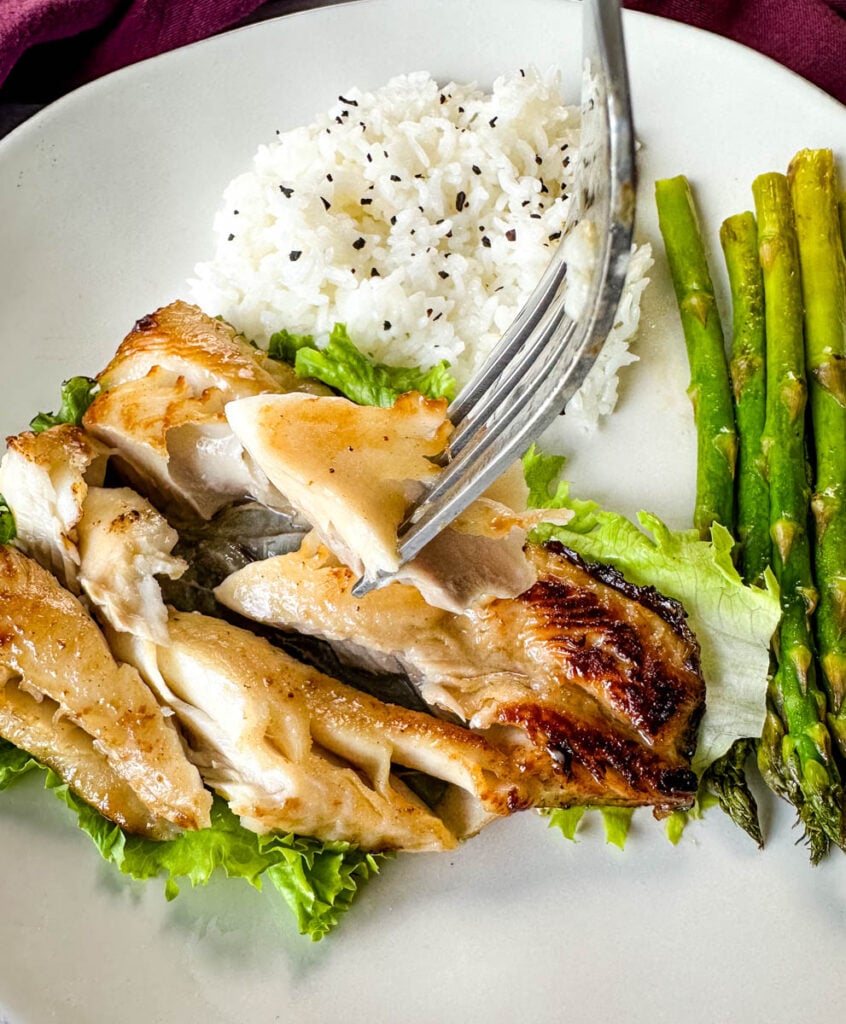
- Insert a fork into the thickest part of the fish. If the fish is cooked through, the flesh will separate easily and be opaque in color. You should also use a meat thermometer and test the internal temperature. The fish should reach an internal temperature of 135-145 degrees.
- Cool before serving.
Notes
Nutrition
Nutrition Data
Macros are provided as a courtesy and should not be construed as a guarantee. This information is calculated using MyFitnessPal.com. To obtain the most accurate nutritional information in a given recipe, you should calculate the nutritional information with the actual ingredients used in your recipe, using your preferred nutrition calculator. You are solely responsible for ensuring that any nutritional information provided is accurate, complete, and useful.
Frequently Asked Questions and Recipe Pro Tips
If you want the best-tasting fish, plan to marinate it in advance. The original version is marinated for at least 24 hours, but you can marinate it for 2-3 days if desired. I marinate it for at least 1 hour and the flavor is still amazing!
As noted above, marinating in advance will help ensure the fish is tender and loaded with amazing flavor.
You will need a pan that is oven safe. I use a cast iron skillet.
Insert a fork into the thickest part of the fish. If the fish is cooked through, the flesh will separate easily and be opaque in color. You should also use a meat thermometer and test the internal temperature. The fish should reach an internal temperature of 135-145 degrees.
Leftovers can be stored in the fridge tightly covered and sealed for 3-4 days.
In general, I recommend you avoid the microwave when you reheat seafood. Seafood and fish are super delicate and microwaves cook at super high temperatures.
I recommend you use the air fryer or oven. If using the oven, place the salmon on a baking sheet lined with parchment paper. Cover the salmon with foil and place it in the oven at 275 degrees until warm.
If using the air fryer, reheat it on 200 degrees for 5-7 minutes or until warm.
If you use the microwave, be swift! Don’t leave it in too long.
Rice wine vinegar and mirin are made from fermented rice. Rice wine vinegar has a sour and tangy taste. Mirin has a high sugar content along with a sweet and syrupy taste. I have tested the recipe using either of these and both will work in the recipe.
If using rice wine vinegar, you will need to add additional sweetener or sugar to the recipe to compensate for its lack of sweetness. Mirin is much sweeter. Without it, the recipe will taste much different.
Black and white cod are caught in different waters. Black cod is native to the Pacific coast white cod typically comes from the North Atlantic ocean. They both have different tastes and textures. White cod is much milder in taste.
White cod has a delicate and sweet flavor. The texture is firm and flaky. It's the perfect fish for those who do not prefer a "fishy" taste. Black cod is smooth and buttery in taste and texture. If you use white cod in this recipe your experience will be incredibly different.
Chilean sea bass is the next best thing since it also has and rich, buttery flavor and texture. Halibut will work as well.
Cooking fish with the skin on can help to add flavor and keep the fish moist. The skin will also protect the flesh of the fish while it cooks, this helps prevent it from over-cooking or drying out. Most black cod will come with the skin-on. I do not remove it prior to cooking.
If your fish has the skin off, that will still work! Cooking the fish with the skin off will allow the fish to cook more evenly, and the flesh will be exposed to more heat which can be desirable for some cooking methods. Keep in mind the flesh will be more delicate and may dry out more easily without the skin to protect it.




Leave a Reply