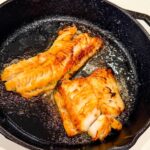
Nobu Miso Black Cod Recipe
If you’ve ever had Nobu Miso Black Cod, you already know… it’s one of those dishes you don’t forget. That buttery, melt-in-your-mouth fish with that sweet and savory glaze? Yeah, we’re making that at home. I’ve been breaking down restaurant favorites into real, doable recipes for over a decade, and this one right here is worth it. No gatekeeping, no complicated steps, just well-seasoned food that actually hits. I’m going to show you how to get that same rich flavor and texture without feeling like you need a culinary degree.
Servings 2 servings
Calories 453kcal
Equipment
Ingredients
- ¼ cup sake
- ¼ cup white miso paste
- ¼ cup mirin See notes for substitutes.
- 2-3 tablespoons sweetener or sugar
- 14-16 oz black cod/sablefish
- 1 tablespoon unsalted butter
Instructions
- Place a saucepan on medium heat and add the sake and mirin. Stir for 2-3 minutes and allow the mixture to come to a boil.
- Add in the miso paste and stir continuously for 2-3 minutes until it has dissolved.
- Add in half of the sugar or sweetener and stir. Add in the remaining sweetener and stir until it has dissolved. Taste the marinade repeatedly. Add additional sweetener to suit your taste if needed.
- Place the fish in a shallow bowl or a zip log bag. Pat the fish dry and add the marinade to the fish. I like to use half of the sauce here for the marinade and the remaining to drizzle over the fish once it has cooked (for ultimate flavor).
- Cover the bowl with wrap or foil or seal the zip lock and place the fish in the fridge. The original version is marinated for at least 24 hours, but you can marinate it for 2-3 days if desired. I marinate it for at least 1 hour and the flavor is still amazing!
- Preheat oven to 400 degrees.
- Place a skillet or grill pan (I use cast iron) on medium-high heat on the stove along with the butter.
- Wipe away any excess marinade from the fish, but leave most of it intact. This is important because excess marinade will char, wiping the excess helps prevent that.
- When the butter has melted, add the marinated fish to the pan with the fish skin side up.
- Sear for 2-3 minutes until the fish turns brown. Flip the fish.
- Place the fish in the oven and bake for 6-9 minutes.
- Insert a fork into the thickest part of the fish. If the fish is cooked through, the flesh will separate easily and be opaque in color. You should also use a meat thermometer and test the internal temperature. The fish should reach an internal temperature of 135-145 degrees.
- Cool before serving.
Notes
I use monkfruit sweetener in this recipe instead of sugar. Feel free to use your sugar or sweetener of choice.
Dry sherry wine, chicken broth or rice wine vinegar can be substituted for sake. This will alter the flavor of the dish. If using any of these options you will need to add additional sweetener or sugar to the recipe to compensate for its lack of sweetness. Mirin is much sweeter. Without it, the recipe will taste much different.
Nutrition
Serving: 6oz | Calories: 453kcal | Carbohydrates: 18g | Protein: 25g | Fat: 28g