
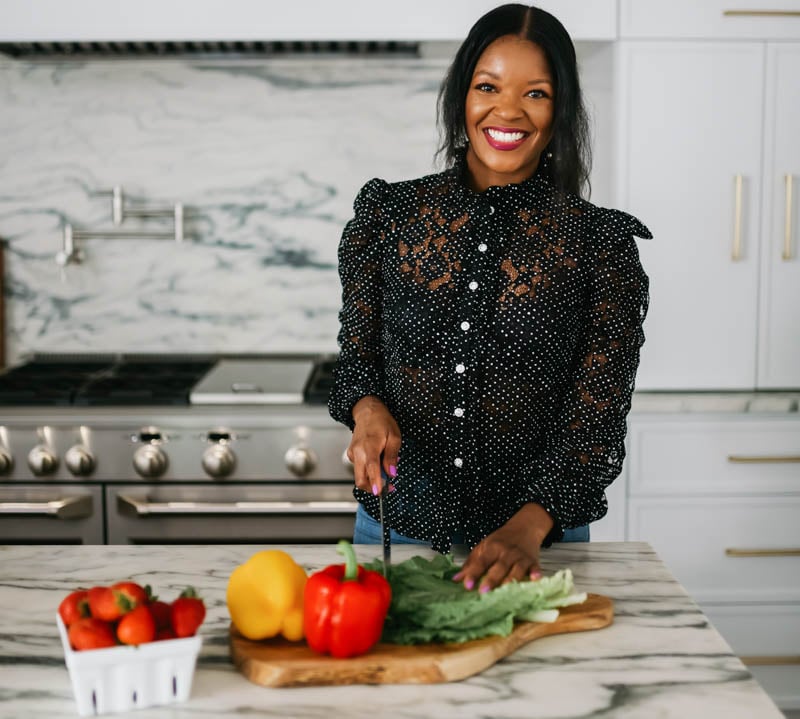
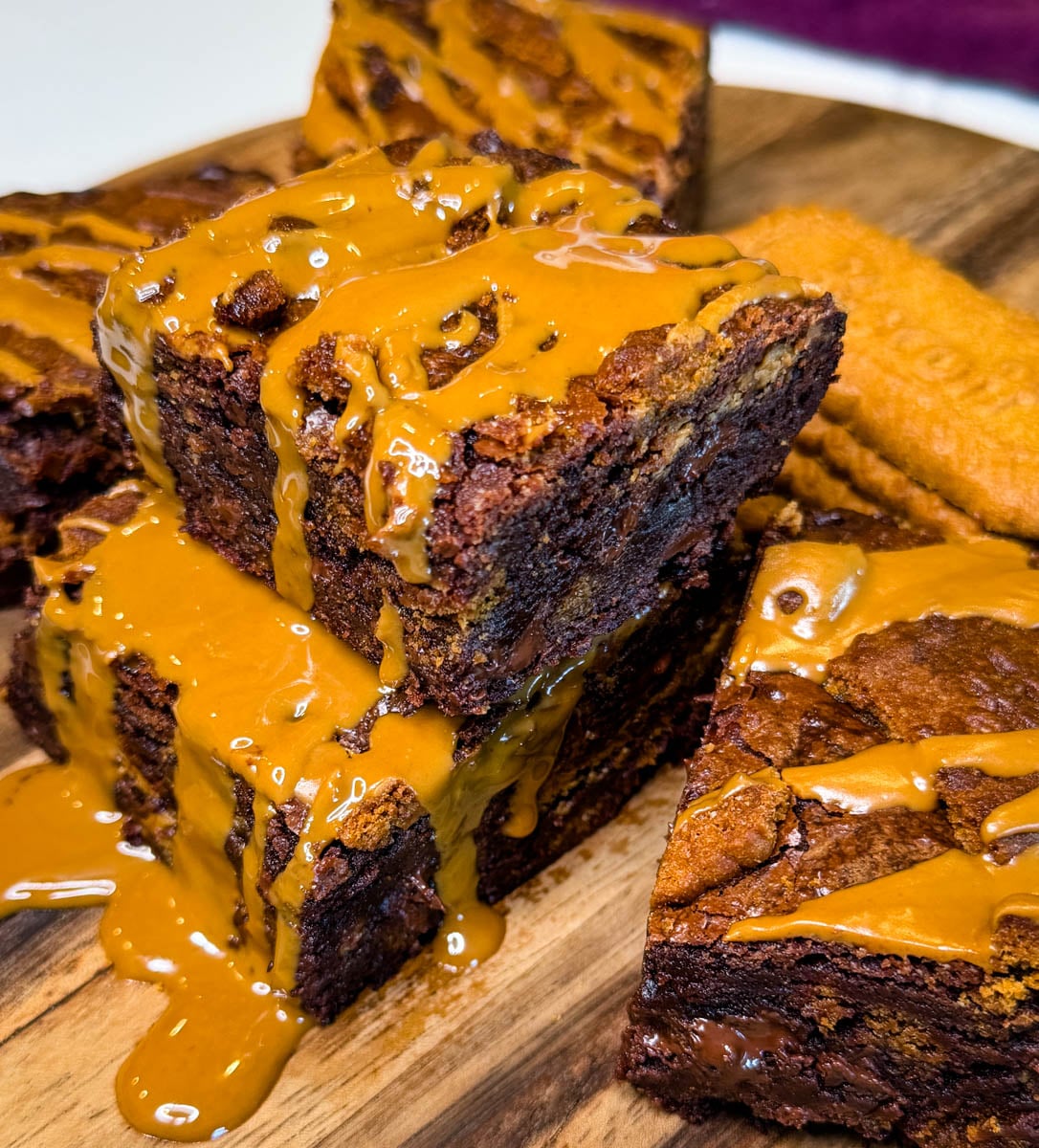
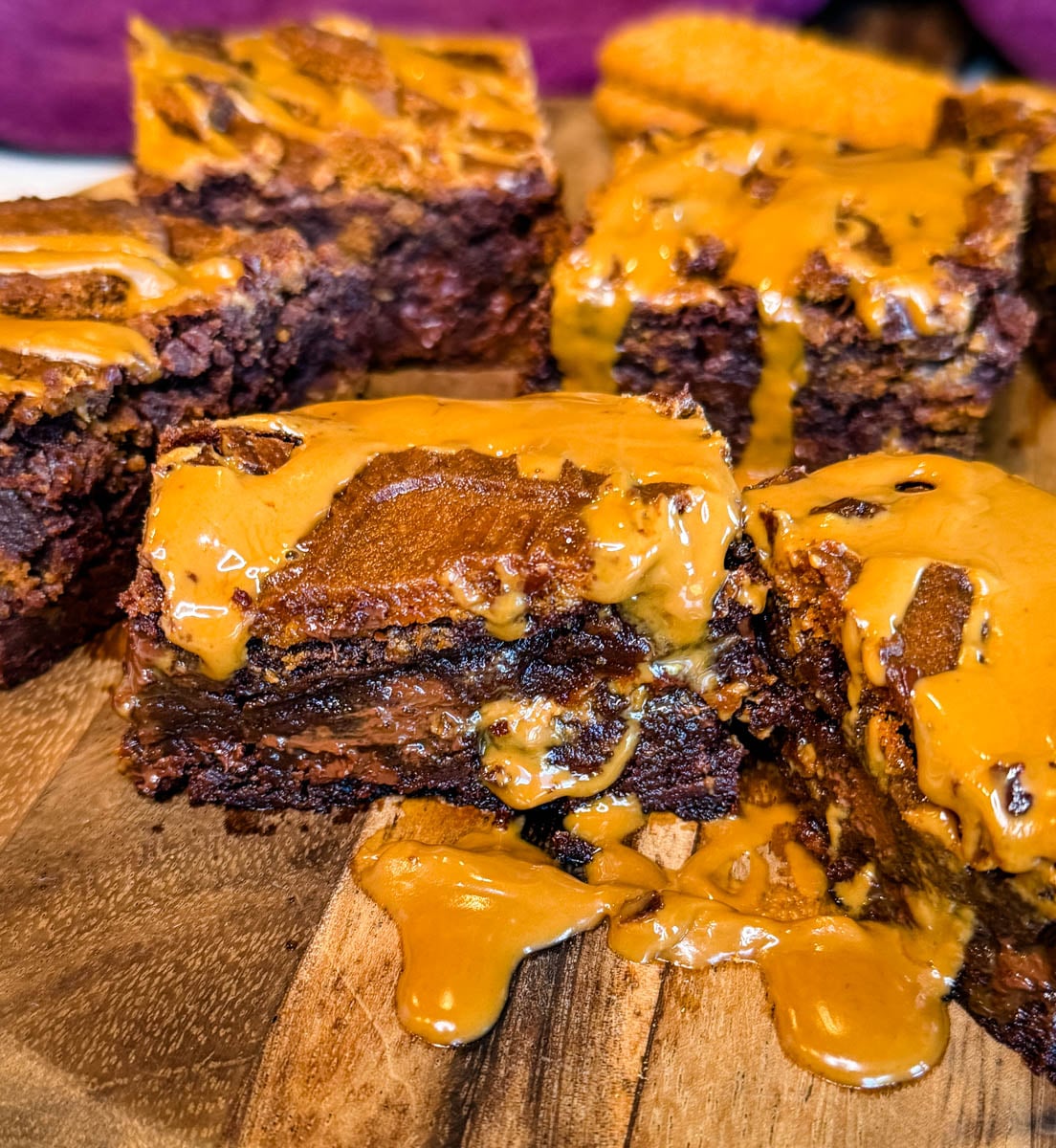
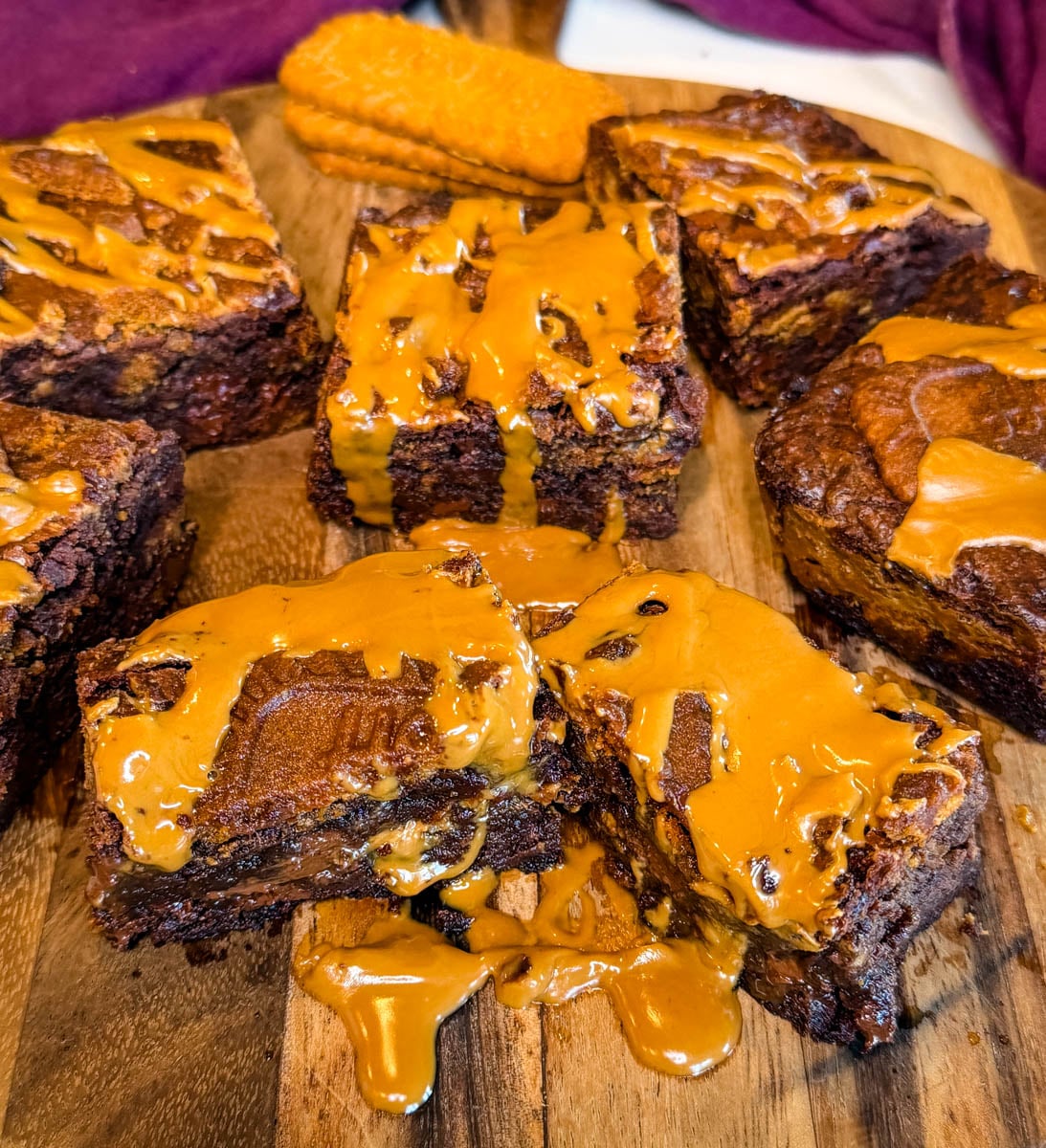
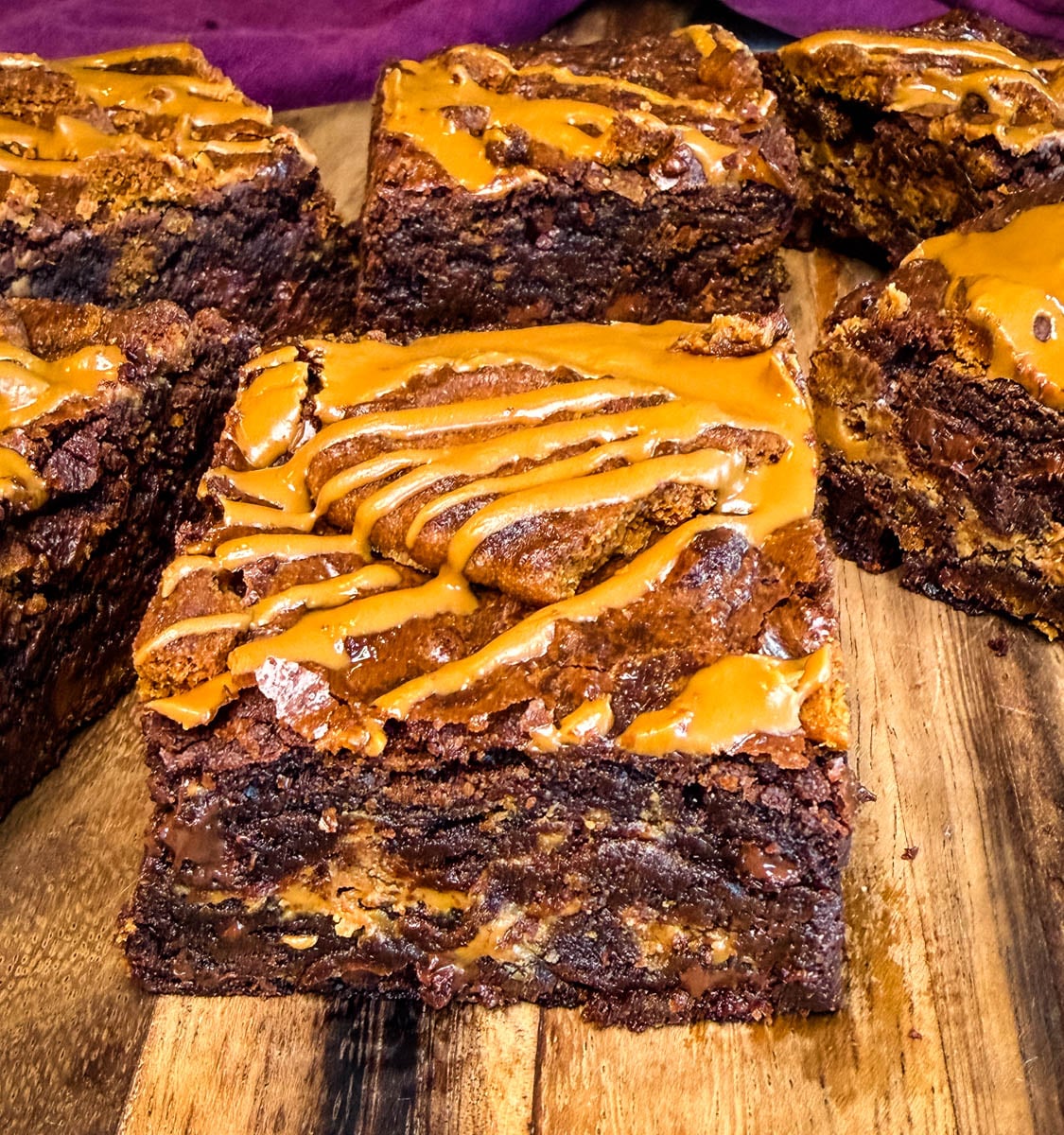
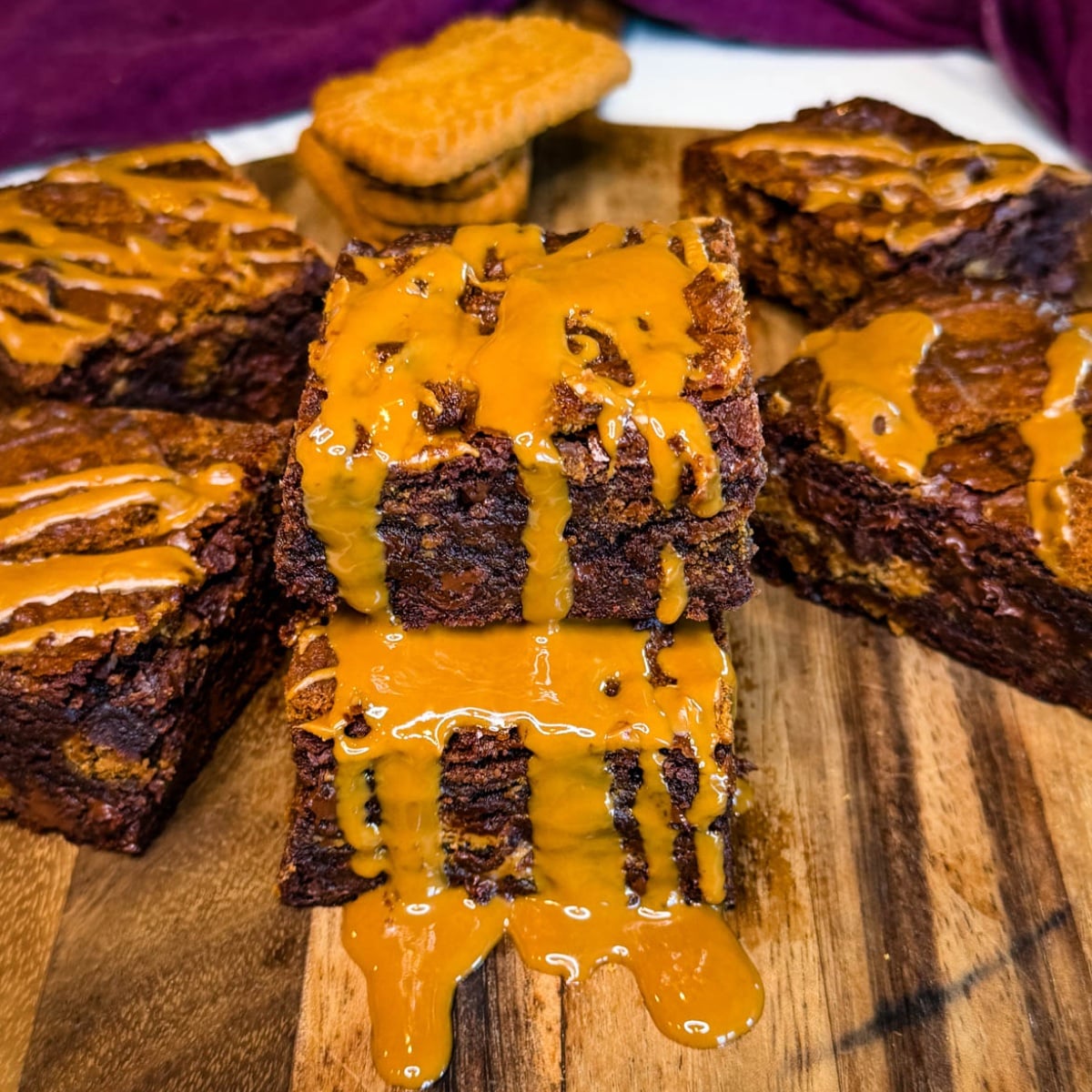
If I’m making brownies, I want them fudgy. These Biscoff brownies have everything I want: crisp edges, a rich fudgy center, and plenty of cookie butter running through every bite. People have trusted my recipes for 10 years, and I know that getting that texture comes down to the right balance of butter, chocolate, sugar, flour, and eggs, and so does how you mix and bake the batter. I’ve tested this recipe to give you everything you need in a good brownie.
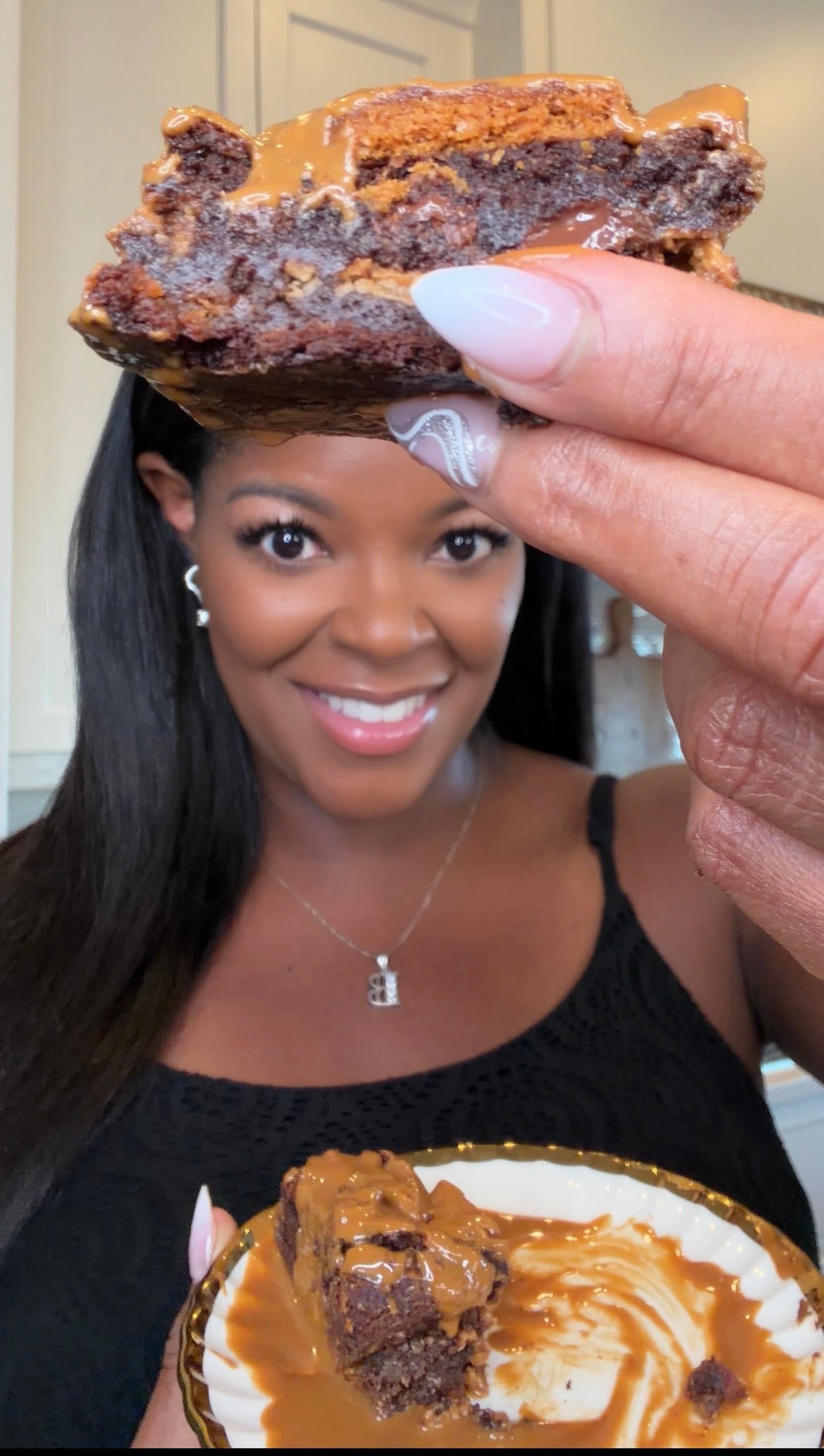
Here's THe Tea FRom Brandi
The key is getting that gooey center without underbaking them, and I’m walking you through exactly how to nail it. The difference between a fudgy brownie and a dry, cakey one is usually in the details. Don’t overdo the flour, don’t overmix the batter, and please don’t wait for a clean toothpick to pull these out of the oven. You want moist crumbs because the brownies will continue to set as they cool. And give them time to cool before slicing.
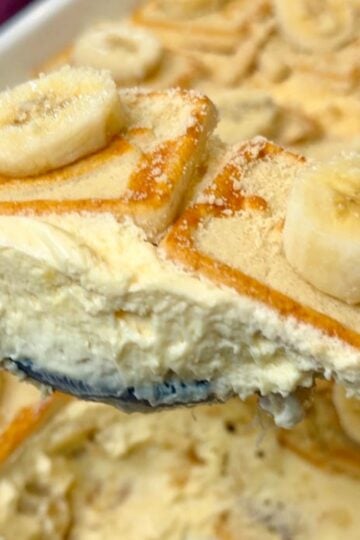
You will also love my Biscoff banana pudding and Southern sweet potato pie.
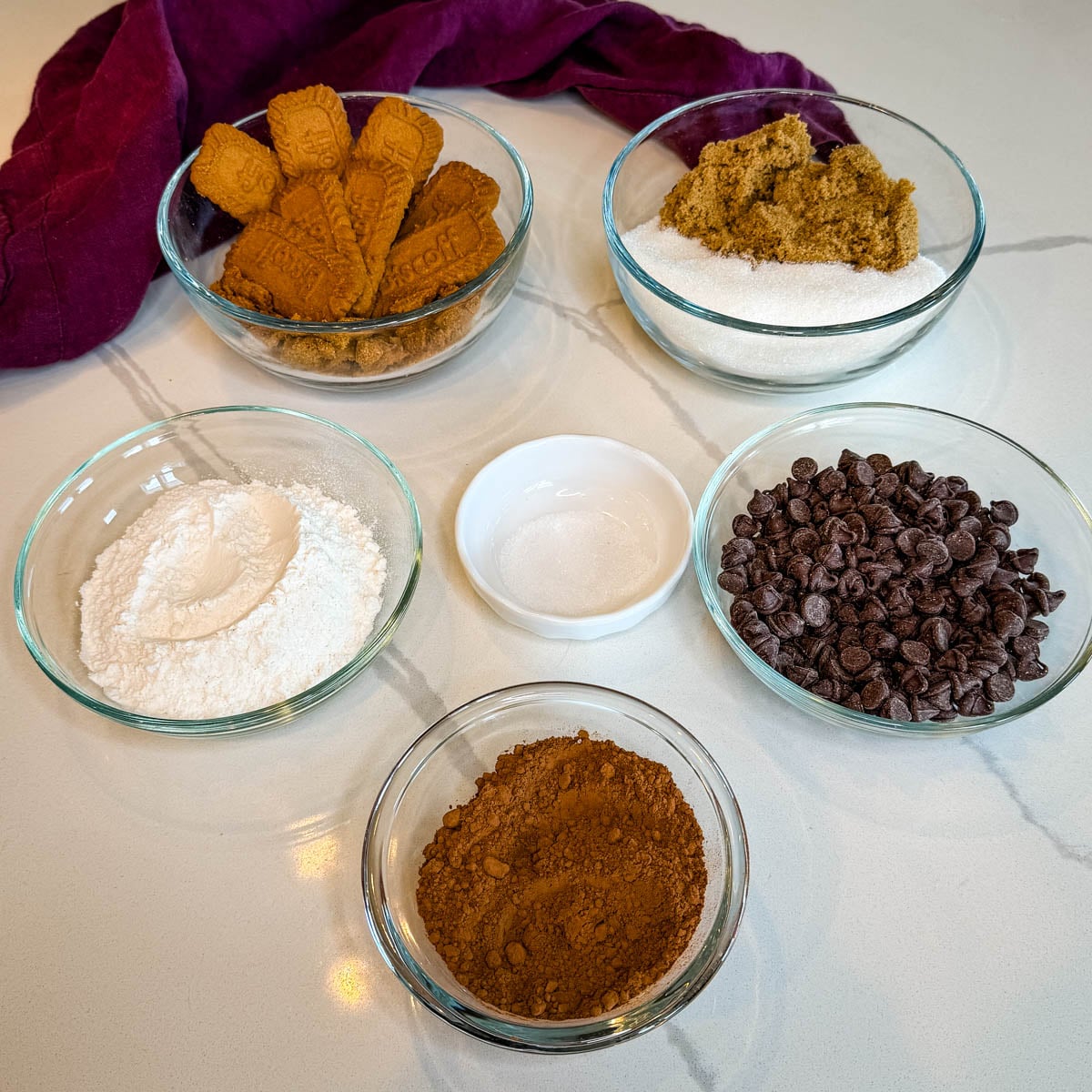
Biscoff Brownie Ingredients
For the Biscoff flavor, I use cookie butter along with Biscoff cookies so you actually taste it. Chocolate can easily overpower everything else, and I didn’t come this far just to make regular brownies with a cookie sitting on top.
- Butter
- Oil: Good options include vegetable oil, canola oil, avocado oil, or another mild-flavored oil. Neutral oil is great in brownies because it helps create a moist, dense, fudgy texture without adding another flavor that competes with the chocolate.
- Sugar or Sweetener: I like to use standard granulated sugar and brown sugar, but only granulated sugar works! Brown sugar contains molasses, which adds moisture, a deeper caramel-like flavor. That caramel flavor works especially well in Biscoff brownies because it complements the warm flavor of the cookie butter.
- Eggs
- Vanilla Extract
- Unsweetened Cocoa Powder
- Flour
- Salt
- Chocolate Chips
- Biscoff cookies Speculoos cookies will work.
- Biscoff Butter: Speculoos Cookie Butter also works!
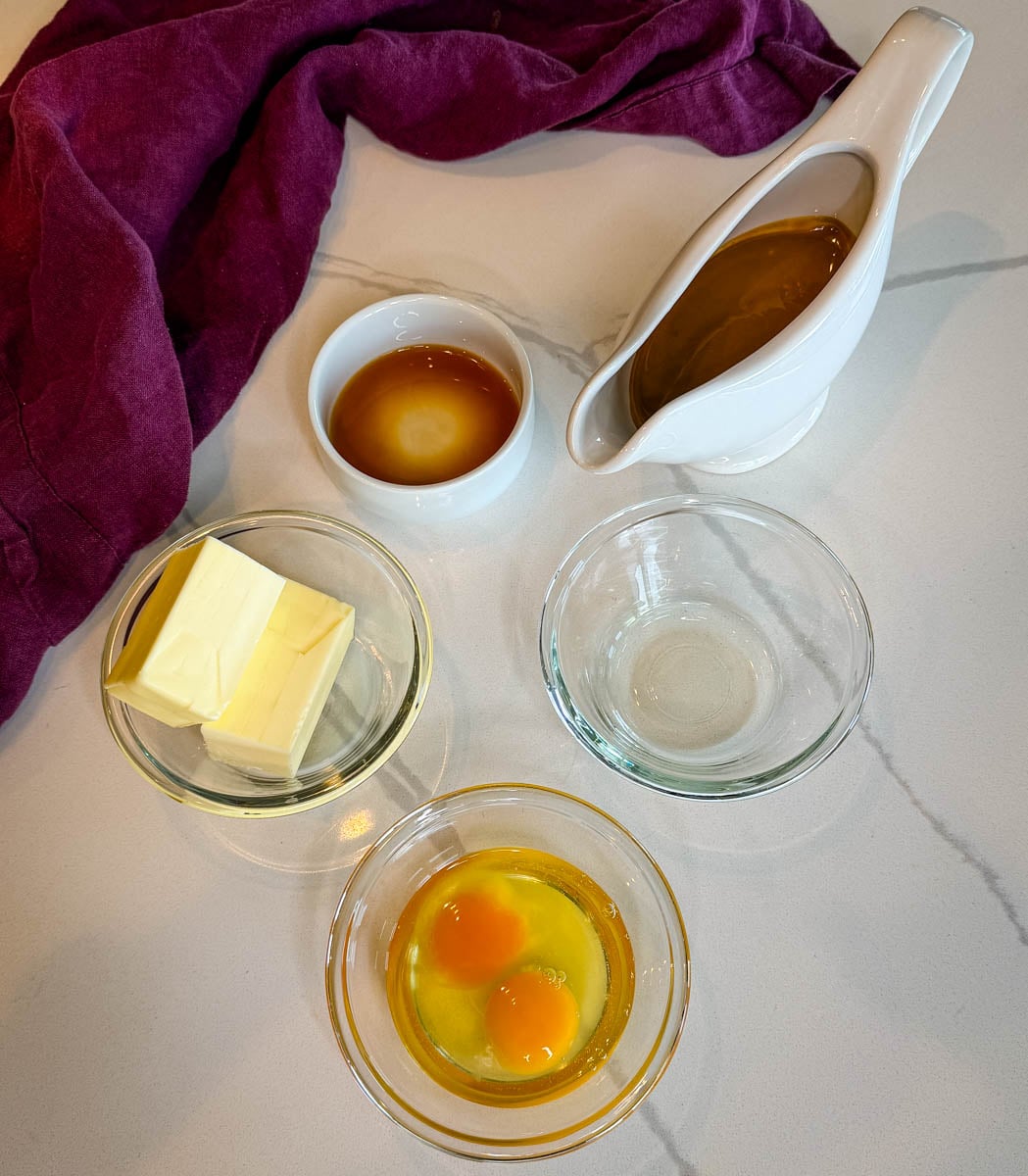
How to Make Biscoff Brownies
Detailed measurements and full instructions can be found in the recipe card at the bottom of this post.
- Prepare the Pan: Preheat the oven to 350°F. Line a baking pan with parchment paper, leaving enough hanging over the sides to easily lift the brownies out once they cool. You can also grease the pan instead.
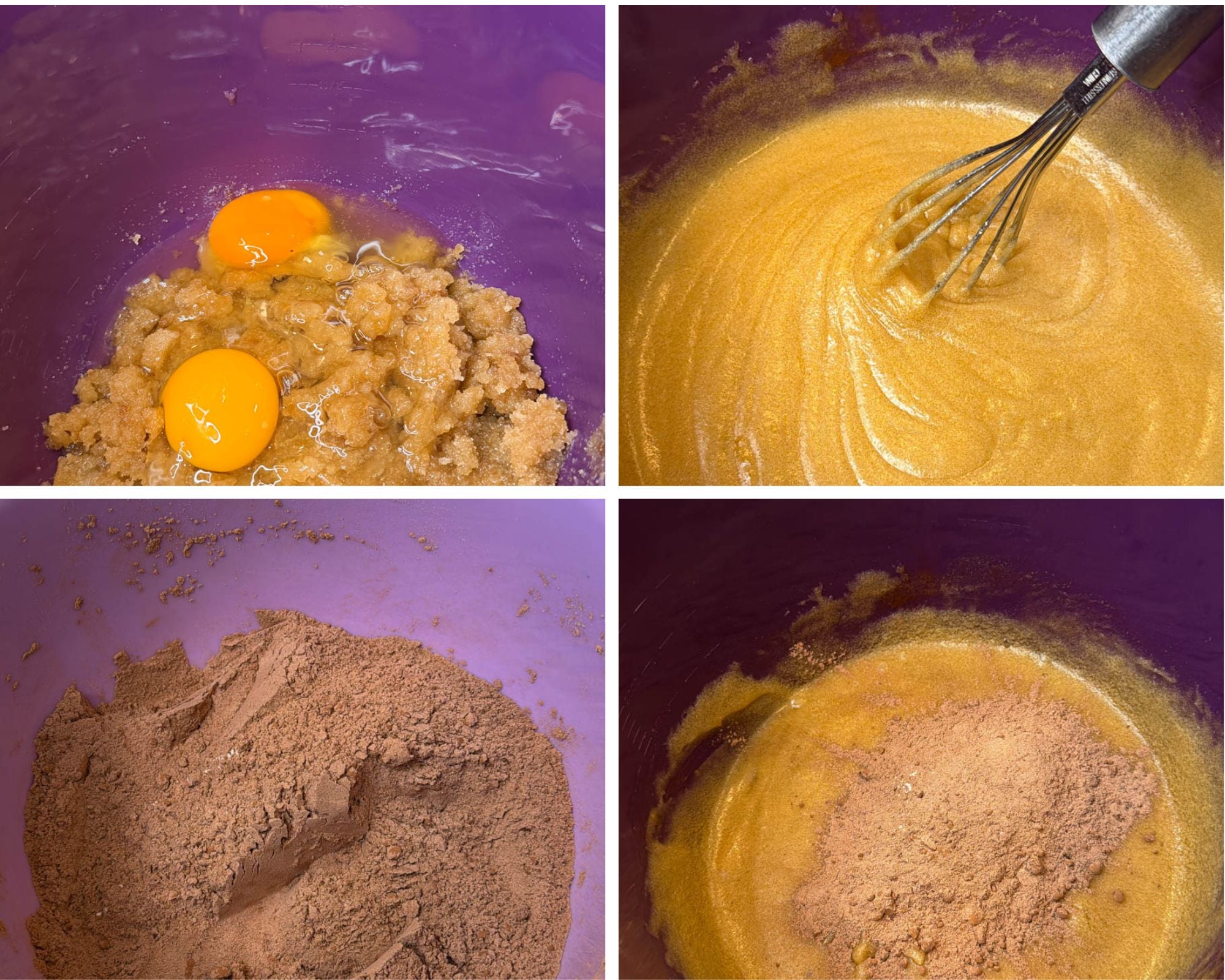
- Combine the Wet Ingredients: Melt the butter and add it to a large mixing bowl with the oil and sugar or sweetener. Stir until well combined. Add the eggs and vanilla extract and mix until smooth.
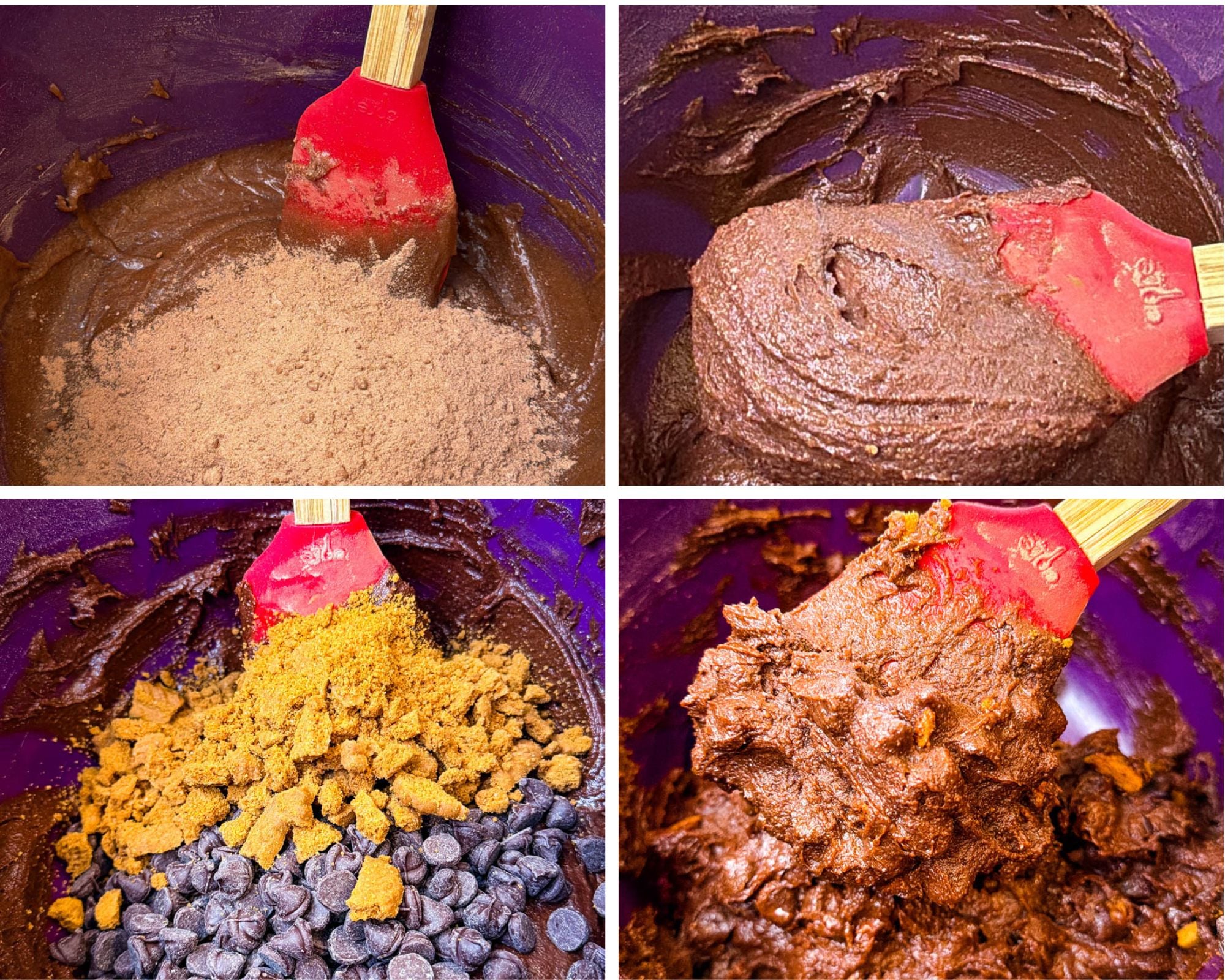
- Add the Dry Ingredients: Add the unsweetened cocoa powder, flour, and salt to a separate bowl and mix. Add the dry ingredients to the bowl with the wet ingredients. Add the mixture in stages. Do not add it all at the same time. Add some of the flour mixture, and gently stir until just combined. Add more and repeat. Do not overmix the batter. Overmixing can give you tougher, cakier brownies instead of a fudgy texture.
- Add the Chocolate Chips and Cookies: Fold the chocolate chips and crumbled cookies into the batter, reserving some for the top if you like.
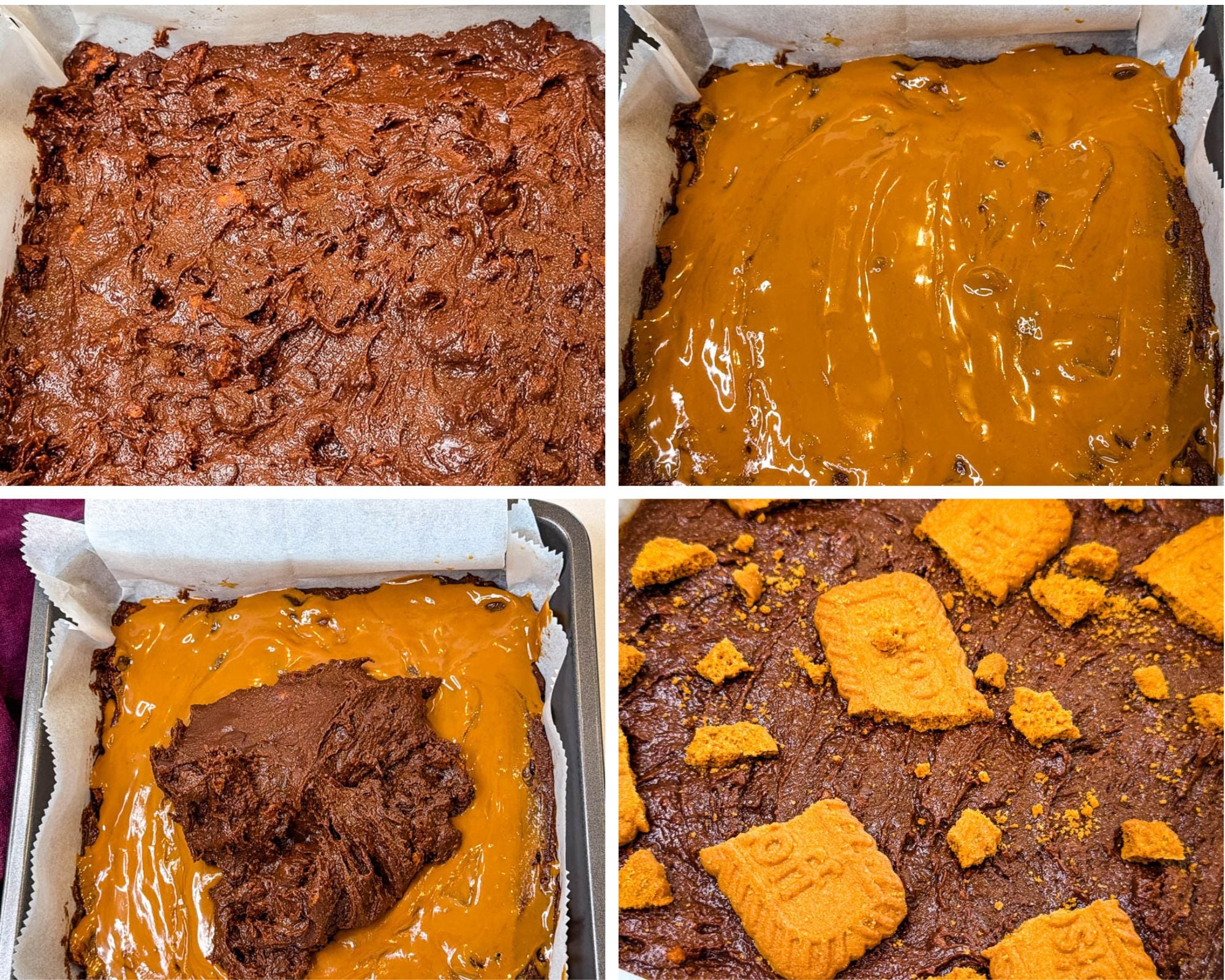
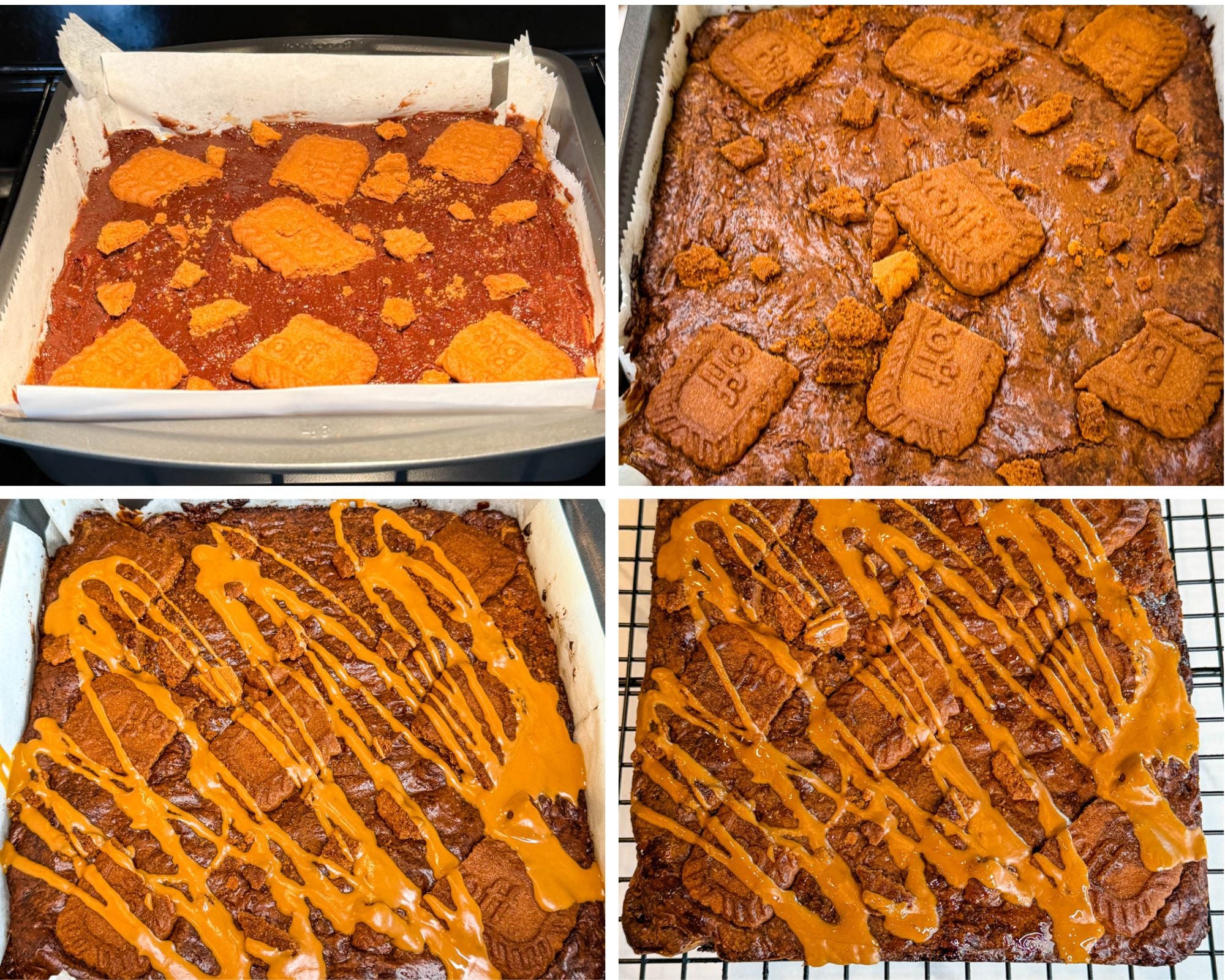
- Add the Biscoff: Spread half of the brownie batter evenly into the prepared pan. Warm the Biscoff butter briefly if needed to make it easier to drizzle. Spoon it over the batter and use a knife or skewer to gently swirl it throughout. Spread the remaining half of brownie batter over the Biscoff spread.
- Add the Cookies: Break the Biscoff cookies into pieces and press them into the top of the batter.
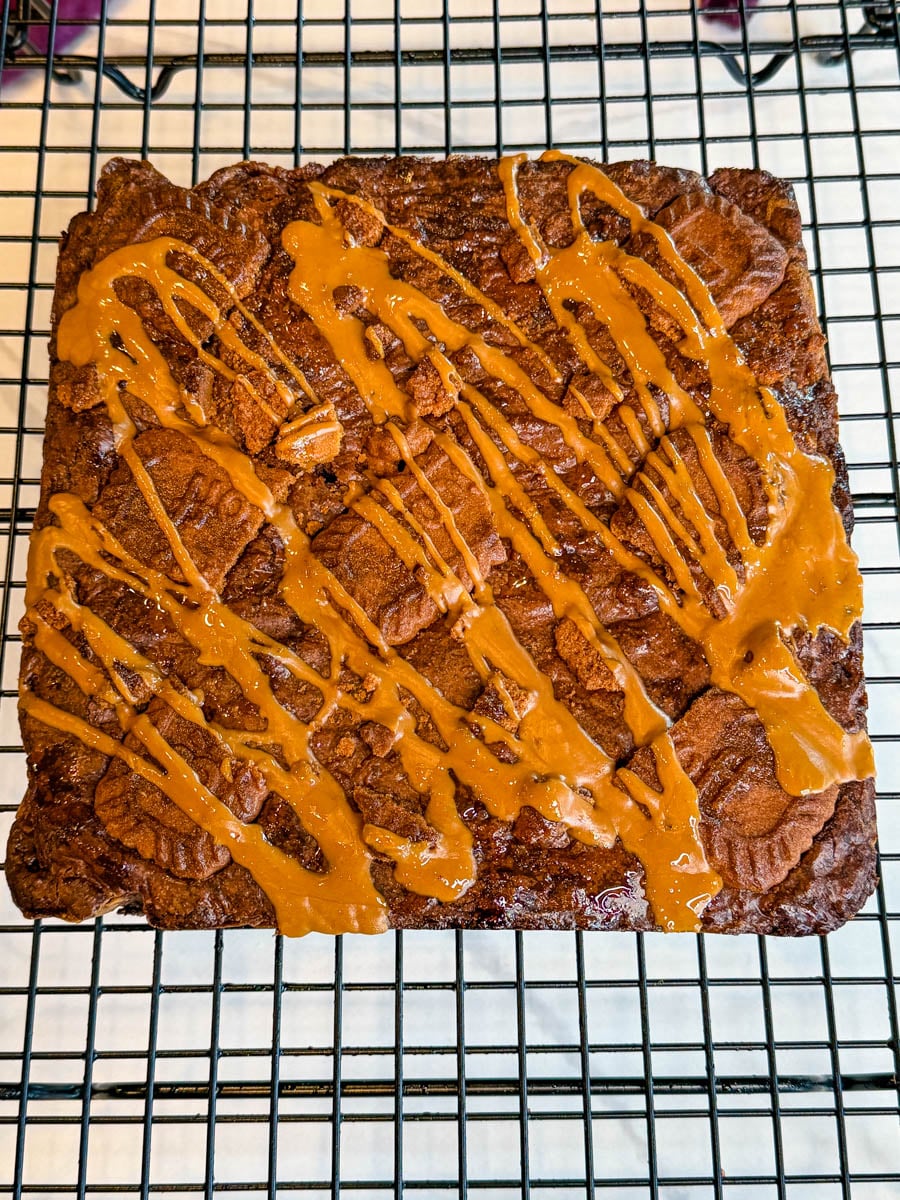
- Bake: Bake until the edges are set and a toothpick inserted near the center comes out with moist crumbs attached. Don’t wait for a completely clean toothpick. That’s how you end up with dry brownies, and we didn’t come this far for that. Drizzle with more Biscoff butter.
- Cool: Let the brownies cool completely in the pan. They will continue to set as they cool. Once cooled, use the parchment paper to lift them from the pan, slice, and serve.
Want to save this recipe for later?
Biscoff Brownies Recipe
Want to save this recipe for later?
Ingredients
- ½ cup unsalted butter Melted, measured solid.
- 2 teaspoons neutral oil I use canola oil. Vegetable oil and avocado oil will also work.
- 1 ½ cups sugar or sweetener I use ½ cup brown sugar and 1 cup granulated sugar. 1½ cups of just granulated sugar works fine.
- 2 eggs Room temperature.
- 1 ½ teaspoons vanilla extract
- ½ cup unsweetened cocoa powder
- ¾ cup all-purpose flour
- 1 teaspoon salt
- 1 cup chocolate chips I use semi-sweet chocolate chips.
- 8 Biscoff cookies Crushed into small pieces.
- 8 Biscoff cookies For topping.
- ½ cup Biscoff Butter Melted and smooth. I microwave for 15-30 seconds
- ¼ cup Biscoff Butter For drizzling at the end. Use more if you like.
Instructions
- Preheat the oven to 350°F. Line a baking pan with parchment paper, leaving enough hanging over the sides to easily lift the brownies out once they cool. You can also grease the pan instead.
- Melt the butter and add it to a large mixing bowl with the oil and sugar or sweetener. Stir until well combined.½ cup unsalted butter, 2 teaspoons neutral oil, 1 ½ cups sugar or sweetener
- Add the eggs and vanilla extract and mix until smooth.2 eggs, 1 ½ teaspoons vanilla extract
- Add the unsweetened cocoa powder, flour, and salt to a separate bowl and mix. Add the dry ingredients to the bowl with the wet ingredients. Add the mixture in stages. Do not add it all at the same time. Add some of the flour mixture, and gently stir until just combined. Add more and repeat. Do not overmix the batter. Overmixing can give you tougher, cakier brownies instead of a fudgy texture.Be sure you are measuring your flour correctly. Too much flour will ruin the texture.Fluff the flour in the container first. Flour settles and compacts as it sits.Spoon the flour into the measuring cup. Don’t scoop the cup directly into the flour because that packs in too much.Don’t shake or tap the cup. That also compacts the flour.Level it off with the flat edge of a knife.½ cup unsweetened cocoa powder, ¾ cup all-purpose flour, 1 teaspoon salt
- Fold the chocolate chips and crumbled cookies into the batter, reserving some for the top if you like.1 cup chocolate chips, 8 Biscoff cookies
- Spread half of the brownie batter evenly into the prepared pan. Warm the Biscoff butter briefly if needed to make it easier to drizzle. Spoon it over the batter and use a knife or skewer to gently swirl it throughout. Spread the remaining half of brownie batter over the Biscoff spread.½ cup Biscoff Butter
- Break the Biscoff cookies into pieces and press them into the top of the batter.8 Biscoff cookies
- Bake until the edges are set and a toothpick inserted near the center comes out with moist crumbs attached, 25-35 minutes. I will say, I never have to bake for 30 minutes. Mine are ready around 25-27 minutes, but every oven bakes differently. Don’t wait for a completely clean toothpick. That’s how you end up with dry brownies, and we didn’t come this far for that. Remove them from the oven and drizzle with more Biscoff butter.¼ cup Biscoff Butter
- Let the brownies cool completely in the pan. They will continue to set as they cool. Once cooled, use the parchment paper to lift them from the pan, slice, and serve.
Notes
- Best Pan to Use: Use a light-colored metal baking pan for the best results. It heats evenly and helps the brownies bake through without overcooking the edges. I would avoid a dark metal pan when possible because it absorbs more heat and can cause the edges and bottom to bake too quickly. Dark metal, glass, and ceramic pans can change the bake time, so keep a close eye on the brownies if you use one.
- Don’t overmix the batter. Once the flour is added, mix just until everything is combined. Overmixing can give you tougher, more cakey brownies instead of that fudgy texture.
- Use room-temperature eggs. They blend into the batter more evenly and help create a smoother batter.
- Don’t skip the oil. Butter brings flavor, while oil helps keep the brownies moist and fudgy.
- Use both sugars for the best texture. Granulated sugar helps with that shiny, crackly top, while brown sugar adds moisture and gives the brownies a richer, chewier texture.
- Use unsweetened cocoa powder. Sweetened cocoa mixes will throw off the sugar and chocolate flavor in the recipe.
- Don’t overbake the brownies. This is the big one. The center should be set but still look slightly soft when you pull them from the oven. A toothpick should come out with moist crumbs, not completely clean.
- Remember they keep cooking after you pull them out. The residual heat from the pan will continue to set the center as the brownies cool.
- Let them cool before slicing. Warm brownies are delicious, but they’re also messy. Cooling allows that fudgy center to set so you can get clean squares.
- Warm the Biscoff cookie butter before drizzling. A few seconds in the microwave will loosen it up and make it much easier to drizzle over the brownies.
- Line the pan with parchment paper. Leave some overhang so you can lift the entire batch out once cooled instead of fighting to get that first brownie out of the pan.
- The pan matters. A different pan size or material can change the baking time. Start checking early rather than relying only on the clock.
Nutrition
Nutrition Data
Macros are provided as a courtesy and should not be construed as a guarantee. This information is calculated using MyFitnessPal.com. To obtain the most accurate nutritional information in a given recipe, you should calculate the nutritional information with the actual ingredients used in your recipe, using your preferred nutrition calculator. You are solely responsible for ensuring that any nutritional information provided is accurate, complete, and useful.
Frequently Asked Questions and Recipe Pro Tips
You may hear it called cookie butter. Speculoos is a good one, too. Think caramelized brown sugar with warm spices. It has notes of cinnamon and a deep, almost toasted flavor that keeps these from tasting like basic chocolate brownies.
It comes down to the balance of fat, sugar, eggs, and flour, along with how long you bake them. Too much flour and overbaking are two of the quickest ways to end up with cakey, dry brownies. We aren't doing that over here.
They do different jobs. Brown sugar adds moisture, chewiness, and deeper caramel flavor. Granulated sugar helps with structure and that gorgeous thin, crackly top. Using both gives you the texture and flavor I want in a brownie.
Oil helps keep the brownies moist, soft, and fudgy, even after they cool. Using a neutral-flavored oil also means you get the texture benefits without covering up the chocolate and Biscoff flavors.
You can, but expect the texture to change. Butter contains water and becomes solid as it cools, while oil stays liquid at room temperature. Brownies made with oil tend to stay softer and fudgier.
Absolutely. If you want a little extra texture, crunchy cookie butter works. I prefer creamy when I want smooth swirls throughout the brownies.
Warm it briefly until it's loose and pourable. Spoon or drizzle it over the brownie batter and gently drag a knife or skewer through it.
Do not wait for a completely clean toothpick. Insert a toothpick near the center and look for moist crumbs. If it's covered in wet batter, they need more time. If it's completely clean, you may have already gone a little farther than I like for fudgy brownies.
The usual suspects are too much flour or too much time in the oven. Measure the flour carefully and start checking the brownies before the end of the recommended bake time. Every oven cooks a little differently.
Too much flour, overmixing, overbaking, or changing the ingredient ratios can all push brownies toward a cakey texture. Once you add the flour, mix just until everything is combined.
Yes, and I know nobody wants to hear that. The brownies are still setting when they come out of the oven. Cutting immediately can make a perfectly fudgy brownie look raw and fall apart. Give them time to cool and you'll get much cleaner slices.
Let them cool completely first. Use a sharp knife and wipe the blade clean between cuts. If you want those extra-clean bakery-style squares, chilling the brownies briefly before slicing works wonders.
Let them cool completely, slice them, and wrap them well before freezing. You can freeze individual brownies so you don't have to thaw the entire batch when you want one. Brownies will keep well in the freezer for up to 3 months when wrapped properly. Wrap each brownie tightly in plastic wrap, then place the wrapped brownies in a freezer-safe zip-top bag or airtight container. For extra protection against freezer burn, add a layer of aluminum foil around the plastic wrap before storing.
Store them tightly covered or in an airtight container at room temperature for about 3-4 days. Keeping air out is the key to preventing them from drying out. After that, they will need to be refrigerated. You can pop them in the microwave to soften them up.
More Dessert Recipes
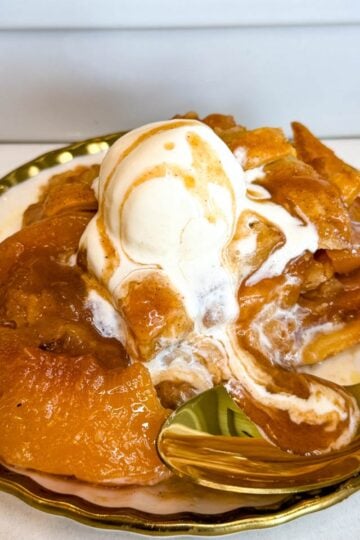
Southern Peach Cobbler
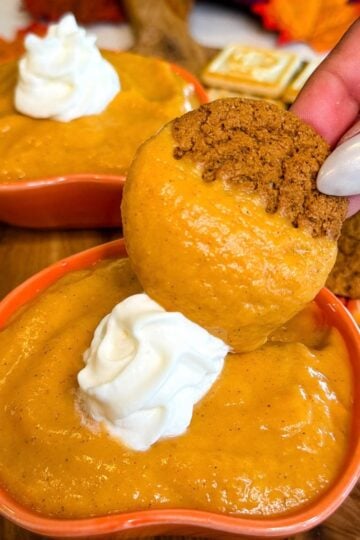
Sweet Potato Pie with Graham Cracker Crust
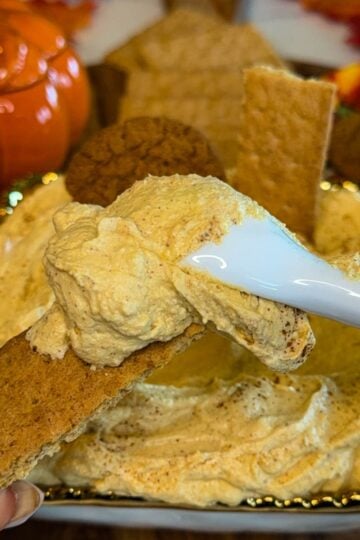
Pumpkin Pie with Graham Cracker Crust
Sugar Free Apple Crisp
Pumpkin Pie with Frozen Crust
Leave a Reply